

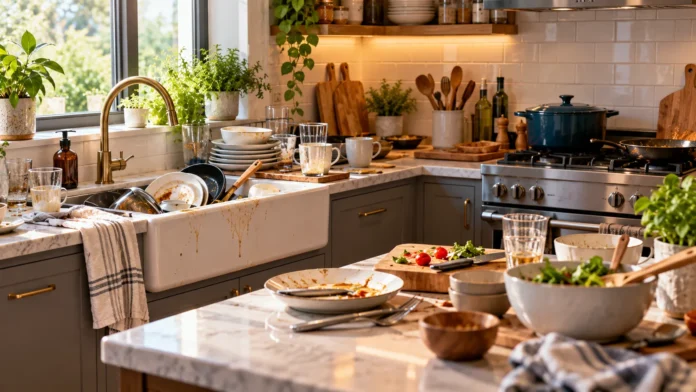
What Is a Dirty Kitchen?
A dirty kitchen is a separate cooking area designed for messier or heavier food preparation. It is often positioned behind or beside the main kitchen and used for frying, grilling, washing large cookware, preparing strong-smelling dishes, or handling bulk ingredients. This setup keeps the primary kitchen cleaner and more presentable, especially in homes where cooking happens frequently.
Unlike a traditional kitchen, a dirty kitchen focuses more on function than display. It may include durable countertops, strong ventilation, deep sinks, open shelving, and practical storage for everyday cookware. The main kitchen can then remain a cleaner social area for light food preparation, dining, entertaining guests, or serving finished meals.
Dirty kitchens are especially useful in households that prepare elaborate meals or cook with ingredients that create smoke, grease, or strong aromas. With thoughtful planning, the space does not need to look unattractive or purely utilitarian. Modern finishes, good lighting, organized storage, and durable materials can turn it into a stylish and efficient extension of the home.
Choose the Right Location for a Dirty Kitchen
The location of a dirty kitchen should make food preparation easier without interrupting the rest of the home. Many homeowners place it directly behind the main kitchen so ingredients, dishes, and finished meals can move between both spaces quickly. A nearby utility room, covered outdoor area, or side extension can also work depending on the property layout.
Ventilation should influence the location because heavy cooking can produce steam, grease, heat, and strong odors. A space with access to an exterior wall makes it easier to install powerful exhaust systems or windows. Proper airflow prevents cooking smells from moving into living rooms, bedrooms, and the cleaner front kitchen area.
Think about plumbing, electrical connections, gas lines, and storage access before finalizing the layout. Positioning the dirty kitchen near existing utilities can reduce construction complexity and cost. The ideal location should feel convenient during everyday cooking while remaining separate enough to contain noise, heat, and mess when the space is used intensively.
Plan a Practical Layout
A good dirty kitchen layout prioritizes movement and workflow. Place the sink, cooking area, refrigerator, and preparation counter so you can move between them without unnecessary steps. Keeping frequently used tools close to the work zone can make the space more efficient, especially when several dishes are being prepared at the same time.
Avoid filling a small room with oversized cabinets or too many appliances. Clear walkways are important because dirty kitchens often involve hot cookware, large pots, and quick movement during meal preparation. A compact L-shaped or galley layout can work well in narrow spaces, while larger rooms may support a U-shaped arrangement with more storage.
Leave enough countertop space beside the sink and cooktop for chopping, cooling, and organizing ingredients. Even a highly functional kitchen becomes frustrating when every surface is crowded. Planning dedicated zones for preparation, cooking, washing, and storage helps the room stay organized and makes cleanup easier after heavier cooking sessions.
Use Durable Countertops and Surfaces
Dirty kitchen surfaces need to handle heat, water, stains, grease, and frequent cleaning. Durable countertop materials such as engineered stone, stainless steel, tile, or other hard-wearing finishes can be practical choices. Select something that fits your budget while remaining easy to wipe down after preparing messy or oily foods.
Backsplashes should also be chosen for practicality. Smooth tiles or solid panels are easier to clean than highly textured materials that trap grease. Extending the backsplash higher behind the stove can protect the wall from splashes and reduce the amount of repainting or deep cleaning required over time.
Flooring should be water-resistant and easy to maintain. Large-format tiles or other durable surfaces can simplify cleanup while handling heavy foot traffic. Avoid very slippery finishes, particularly near the sink and cooking areas. A practical surface can still look stylish when its color and texture coordinate with the wider kitchen design.
Improve Ventilation for Heavy Cooking
Strong ventilation is one of the most important features in a dirty kitchen. A powerful range hood can remove smoke, steam, grease particles, and cooking odors before they spread through the room. This becomes especially useful when frying, grilling, or preparing dishes with strong spices and aromas.
Natural ventilation can support mechanical systems when windows or exterior doors are available. Opening them during heavy cooking can improve airflow and help release excess heat. However, natural ventilation alone may not be enough if the kitchen is used regularly for high-temperature cooking or contains several powerful appliances.
Keep ventilation equipment clean so it continues working efficiently. Grease filters should be inspected and washed or replaced according to their condition. A neglected exhaust system can become less effective and may allow odors and grease to build up. Good airflow makes the room more comfortable while protecting nearby spaces from lingering cooking smells.
Add Smart Storage Without Creating Clutter
Storage in a dirty kitchen should keep essential items easy to reach while preventing countertops from becoming crowded. Deep drawers can hold heavy pots and pans, while open shelves can store frequently used bowls, spices, or cooking tools. Closed cabinets are useful for less attractive supplies that you prefer to keep out of sight.
Vertical storage can make a small dirty kitchen much more efficient. Wall-mounted racks, pegboards, hooks, or tall cabinets use space that might otherwise remain empty. Keep heavy objects on lower levels for safety, while lighter items can be stored higher where they are less frequently needed.
Group items according to how you use them. Keep cleaning supplies near the sink, cooking oils and seasonings near the stove, and food containers near the preparation counter. This simple organization system reduces unnecessary movement and makes it easier to maintain order even when the kitchen is busy.
Create a Functional Cooking Zone
The cooking area is usually the heart of a dirty kitchen, so it should be designed for heavy use. A practical cooktop with enough burners allows several dishes to be prepared at once. If the household grills, fries, or uses specialized cookware frequently, make sure there is sufficient space around the stove for safe handling.
Heat-resistant surfaces around the cooking zone are essential. Keep combustible materials away from burners and make sure nearby storage does not interfere with ventilation. A wide counter beside the stove provides a convenient place for hot pans, ingredients, and serving dishes without forcing you to carry them across the room.
Good lighting is equally important around the stove. Bright task lighting helps you monitor food, read labels, and clean surfaces properly after cooking. Avoid relying only on one central ceiling fixture. A combination of overhead lighting and focused illumination around work zones makes the kitchen safer and more comfortable to use.
Install a Deep and Practical Sink
A large sink can make a dirty kitchen significantly easier to manage. Deep basins provide space for washing oversized pots, roasting trays, vegetables, and bulky cooking equipment. This keeps difficult cleanup tasks away from the main kitchen and allows the cleaner space to remain available for lighter washing and serving.
Choose a faucet with enough height and reach to handle large cookware comfortably. A pull-down or flexible spray function can make rinsing easier and help clean the sink itself. Position the sink near a preparation area so vegetables, meat, or other ingredients can be washed and moved directly to the work surface.
Drainage should also be planned carefully. Water should flow quickly without collecting around the sink area or creating damp conditions inside cabinets. Keeping this zone dry and clean reduces odors and makes maintenance easier. A well-designed washing area can become one of the most useful features in the entire dirty kitchen.
Use Lighting to Make the Space Feel Fresh
Dirty kitchens are often treated as secondary spaces, but good lighting can make them feel brighter and more welcoming. Strong ambient lighting helps illuminate the entire room, while task lighting improves visibility over counters, sinks, and cooking areas. A well-lit kitchen is also easier to clean because spills and grease are more visible.
Natural light can make a major difference when windows are available. Light-colored walls, cabinets, and reflective surfaces can help distribute daylight through a compact room. Even a small window can prevent the space from feeling closed or overly utilitarian, especially when combined with simple, uncluttered finishes.
Choose lighting that is practical rather than purely decorative. Fixtures should tolerate heat and moisture and be positioned where shadows will not interfere with food preparation. If you want a more polished look, subtle pendant or wall lighting can add style while keeping the overall design focused on functionality.
Add Fresh Style Without Losing Function
A dirty kitchen can still look attractive without becoming overly decorative. Start with a simple color palette that feels clean and works with the materials already used in your home. White, gray, beige, muted green, and natural wood tones can create a fresh appearance while remaining easy to coordinate with appliances and storage.
Open shelving, attractive containers, and simple hardware can add personality without reducing practicality. Avoid filling shelves with items that collect grease or dust unnecessarily. A few useful objects displayed neatly will look better and be easier to maintain than a large collection of purely decorative accessories near the cooking area.
Plants can also soften the appearance if the room has enough natural light. Choose easy-care varieties and position them away from intense heat or grease. Small herbs can be both decorative and useful, creating a fresher atmosphere while supporting everyday cooking. The goal is to add warmth without making cleaning more difficult.
Connect the Dirty Kitchen With the Main Kitchen
The dirty kitchen should feel connected to the main kitchen even if the two spaces serve different purposes. Repeating some colors, cabinet finishes, hardware, or flooring can create visual continuity. This prevents the secondary room from feeling like an unrelated utility area added without consideration for the rest of the home.
At the same time, the dirty kitchen can use more durable and practical versions of the same materials. For example, the front kitchen may feature elegant stone and decorative cabinetry, while the back kitchen uses simpler surfaces in similar colors. This keeps both areas coordinated while allowing each one to support different levels of cooking activity.
A connecting door, pass-through, or short corridor can improve workflow between the spaces. Finished dishes can move quickly to the serving area, while used cookware can return to the dirty kitchen for washing. Good circulation makes the two kitchens feel like one functional system rather than completely separate rooms.
Keep the Dirty Kitchen Easy to Clean
Easy cleaning should be built into the design from the beginning. Smooth surfaces, minimal grout lines, closed storage, and wipeable backsplashes reduce the amount of effort required after cooking. Avoid unnecessary decorative grooves and hard-to-reach corners in areas that are regularly exposed to grease and steam.
Create a simple daily cleaning routine rather than waiting for buildup to become difficult. Wipe counters and cooking surfaces after use, rinse the sink, and clean visible splashes around the stove. Regular light cleaning takes less time than occasional deep scrubbing and helps the room stay fresh even with heavy use.
Pay attention to hidden areas as well. Cabinet handles, exhaust filters, floor edges, and appliance sides can collect grease gradually. A weekly inspection makes it easier to catch these areas before grime becomes noticeable. When the room is designed for easy maintenance, a dirty kitchen can remain practical without actually looking dirty.
Make a Small Dirty Kitchen Feel Bigger
A compact dirty kitchen can still be highly functional with careful planning. Use light colors, slim cabinets, and vertical storage to create a more open feeling. Avoid oversized islands or bulky furniture that reduce circulation. In a narrow space, every element should serve a clear purpose.
Wall-mounted shelves and hanging storage can free up valuable countertop area. Tall cabinets can provide additional storage without increasing the room’s footprint. If possible, use sliding or pocket doors instead of doors that swing into the room, because they preserve more usable floor space around work zones.
Keep visual clutter under control by limiting the number of items left on counters. Matching containers and concealed storage can make a small room feel calmer and larger. Good lighting and a consistent color scheme also help. Even a modest dirty kitchen can look fresh when the layout remains organized and efficient.
Conclusion
A dirty kitchen can be one of the most practical upgrades for a home where cooking is frequent or intensive. By separating heavy food preparation from the main kitchen, it helps contain grease, smoke, strong odors, and large-scale cleanup. The result is a cleaner front kitchen and a more efficient place for everyday cooking.
The best design combines durable surfaces, strong ventilation, smart storage, good lighting, and a practical workflow. A deep sink, useful cooking zone, and easy-to-clean materials can make the space significantly more comfortable. Thoughtful styling can also prevent the room from feeling purely functional or unfinished.
Whether you are designing a large back kitchen or a compact secondary cooking area, focus on how you actually cook. Prioritize movement, ventilation, storage, and maintenance before decorative details. With careful planning, a dirty kitchen can become an organized, attractive, and highly useful part of your home.
FAQs
What is the purpose of a dirty kitchen?
A dirty kitchen is used for heavy or messy cooking, including frying, grilling, and washing large cookware. It helps keep smoke, grease, odors, and clutter away from the main kitchen.
Does a dirty kitchen need strong ventilation?
Yes. Good ventilation is especially important because dirty kitchens often handle high-heat cooking and strong aromas. A powerful range hood and access to fresh air can make the room much more comfortable.
How small can a dirty kitchen be?
Even a compact area can work if the layout is efficient. Focus on a stove, sink, preparation counter, storage, and clear walkways rather than trying to include unnecessary furniture or oversized appliances.
What materials are best for a dirty kitchen?
Durable, easy-to-clean materials such as tile, stainless steel, engineered stone, and moisture-resistant cabinetry work well. Choose surfaces that can tolerate frequent washing, heat, grease, and everyday wear.
Can a dirty kitchen still look stylish?
Yes. Coordinated colors, simple cabinets, good lighting, attractive hardware, and organized storage can make a dirty kitchen feel polished. The key is adding style without reducing practicality or making cleaning harder.