

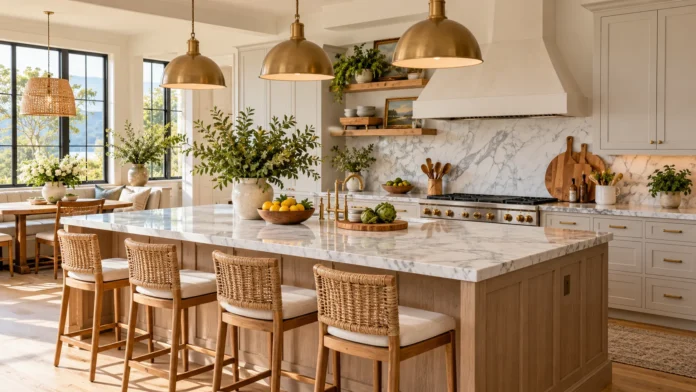
Start With a Clear Kitchen Vision
A beautiful kitchen begins with a clear idea of how you want the space to feel and function. Before choosing cabinets, countertops, or colors, think about your daily routine and the atmosphere you enjoy. Some people prefer a bright modern kitchen, while others feel more comfortable with warm wood, traditional details, and softer finishes.
Consider how much time you spend cooking, entertaining, eating, and storing household items. A kitchen designed for frequent cooking needs practical work surfaces and organized storage, while an entertainment-focused space may benefit from a large island and open seating. Understanding these priorities helps you create a room that looks attractive without sacrificing everyday convenience.
Gather kitchen inspiration from several styles rather than copying one complete design. You may love modern cabinets, rustic wood shelves, and classic stone countertops at the same time. Combining selected features thoughtfully can create a personalized kitchen that feels fresh, practical, and connected to the rest of your home.
Refresh Your Kitchen Color Palette
Color can completely change how a kitchen feels without requiring a major structural renovation. White, cream, beige, and soft gray remain popular because they create a bright and flexible background. Warmer shades such as taupe, clay, olive, and muted blue can add personality while still feeling calm enough for everyday living.
You do not need to use the same color across every surface. Cabinets can provide the main shade while walls, backsplash tiles, and accessories introduce complementary tones. Two-tone kitchens are another option, with darker lower cabinets and lighter upper cabinets creating visual balance without making the room feel overly heavy.
Before committing to a color, test samples in different parts of the kitchen. Natural and artificial light can dramatically affect how paint and cabinet finishes appear throughout the day. A shade that looks perfect in a showroom may feel completely different beside your flooring, countertops, appliances, and existing furniture.
Upgrade Cabinets for a Fresh Look
Cabinets occupy a large amount of visual space, so even small changes can make the kitchen feel noticeably newer. If the cabinet boxes remain in good condition, repainting or replacing the doors may be more practical than installing completely new units. Updated handles and knobs can also create a surprising difference with relatively little work.
For a clean modern style, consider simple flat-panel or streamlined shaker cabinets. Traditional kitchens can use more detailed door profiles, glass-front sections, or decorative hardware. Mixing closed cabinetry with a few open areas can keep the room from looking too solid while still providing enough concealed storage for everyday dishes and supplies.
Choose cabinet finishes that work with your lifestyle as well as your preferred design. Very glossy doors can look sleek but may show fingerprints more easily, while textured or matte finishes may feel softer. Durable surfaces are especially important in busy family kitchens where doors and drawers are opened repeatedly throughout the day.
Make the Kitchen Island Work Harder
A kitchen island can become the center of the room when it combines preparation space, storage, seating, and visual style. Even a modest island can provide extra countertop area for chopping, serving, or casual meals. In larger kitchens, the island can also contain appliances, a sink, drawers, or additional cabinets.
Think carefully about movement around the island before choosing its size. There should be enough room for people to walk comfortably and open nearby cabinets, appliances, and drawers. An oversized island can make an impressive photograph but may become frustrating if it creates narrow pathways or interrupts the natural working flow of the kitchen.
The island is also a good place to introduce contrast. A different cabinet color, wood finish, countertop material, or pendant-light design can turn it into a focal point. Bar stools provide another opportunity to add texture and personality through upholstery, wood, metal, or curved shapes that complement the wider kitchen design.
Use Lighting to Create Better Atmosphere
Good kitchen lighting combines functionality with atmosphere. A single ceiling fixture rarely provides enough light for cooking, cleaning, dining, and evening relaxation. Layering ambient, task, and decorative lighting allows you to adjust the room for different activities while making the kitchen look more polished and thoughtfully designed.
Pendant lights can create a strong focal point above an island or dining area. Under-cabinet lighting improves visibility on countertops and can make the room feel warmer after dark. Recessed ceiling lights provide general illumination, while wall lights or small decorative fixtures can highlight shelving, artwork, or architectural details.
Pay attention to light temperature as well as fixture style. Very cool light can make a warm kitchen feel clinical, while extremely yellow light may affect how colors and food appear. Choosing a consistent, comfortable light temperature throughout the room helps cabinets, countertops, flooring, and decorative finishes look more natural.
Add Texture With Backsplashes and Surfaces
Texture prevents a kitchen from feeling flat, especially when the color palette is simple. A backsplash can introduce pattern, shine, movement, or handmade character without overwhelming the entire room. Subway tiles, stone, textured ceramics, patterned tiles, and large-format slabs can all create different visual effects behind countertops and cooking areas.
Countertops provide another important opportunity to add texture. Natural-looking stone patterns can create movement, while simple solid surfaces support a cleaner minimalist design. When using a dramatic countertop, keeping the backsplash quieter may prevent visual competition. Likewise, a simple worktop allows a more decorative backsplash to become the main feature.
Mix smooth and tactile materials to create depth. Matte cabinets can look beautiful beside polished stone, while wood shelving adds warmth against painted surfaces. The goal is not to use as many textures as possible but to create enough contrast that the kitchen feels layered, comfortable, and visually interesting.
Bring Warmth With Natural Materials
Natural materials can make a kitchen feel more welcoming by softening hard surfaces such as metal, stone, glass, and tile. Wood is particularly effective and can appear through cabinets, open shelving, stools, flooring, or decorative accessories. Even a small amount of natural wood can make an all-white kitchen feel less cold.
Stone, woven materials, linen, and ceramic pieces can add similar warmth. Consider baskets for storage, linen tea towels, handmade pottery, or a natural stone serving board displayed on the counter. These details create a lived-in feeling without requiring major changes to the permanent elements of the room.
Plants and herbs can also introduce natural color and texture. A small pot of basil, rosemary, or mint near a bright window adds freshness while remaining useful for cooking. Larger greenery can work in unused corners if space and light allow, helping connect the kitchen with the rest of the home.
Improve Storage Without Adding Clutter
A fresh-looking kitchen usually feels organized rather than overloaded. Start by identifying items that regularly create clutter on counters, including appliances, food containers, utensils, and paperwork. Creating a specific storage place for frequently used objects can make the room feel calmer without forcing you to hide everything you actually use.
Deep drawers are useful for pots, pans, mixing bowls, and larger kitchen tools because they allow items to remain visible from above. Pull-out organizers can improve narrow cabinets, while drawer dividers keep smaller utensils from becoming mixed together. Vertical storage can also help with trays, chopping boards, baking sheets, and lids.
Open shelving should be used selectively if you want a clean appearance. Display items that are both useful and attractive, such as glasses, simple ceramics, or regularly used bowls. Avoid filling every shelf with decorative objects, because too many small items can make the kitchen harder to clean and visually more crowded.
Create a More Inviting Dining Area
If your kitchen includes a breakfast corner or dining area, treat it as part of the overall design rather than a separate zone. Repeating colors, materials, or lighting styles helps both spaces feel connected. A wooden dining table can echo shelves or flooring, while upholstery can repeat a cabinet or backsplash accent color.
Comfort matters as much as appearance when choosing seating. Chairs should be easy to move, supportive enough for longer meals, and suitable for the available space. Built-in benches can work particularly well in compact kitchens because they use corners efficiently and may provide additional storage beneath the seats.
Simple styling can make the dining area feel more welcoming. A pendant light, small centerpiece, framed artwork, or vase of fresh flowers can create a finished look without adding clutter. Keep enough clear table space for everyday meals so decorative styling does not interfere with the practical purpose of the area.
Add Character With Small Decorative Details
You do not need a complete renovation to give your kitchen more personality. Small changes such as new hardware, artwork, countertop accessories, rugs, or decorative bowls can refresh the room quickly. These details are also easier to change later, making them useful when you enjoy updating your interior style over time.
Choose accessories that connect with the larger color and material palette. For example, black handles can coordinate with dark lighting fixtures, while brass hardware can add warmth beside cream or green cabinets. Repeating a finish in two or three locations often looks more intentional than introducing a different metal on every surface.
Avoid filling every empty area simply because space is available. A few carefully chosen objects usually have more impact than many unrelated decorations. Leaving some countertops and shelves clear allows attractive materials and architectural features to stand out while making daily cleaning and food preparation considerably easier.
Keep the Kitchen Practical and Timeless
Kitchen trends can provide useful inspiration, but the best design should still work for your household several years from now. Permanent features such as cabinets, flooring, and countertops are expensive to replace, so choosing durable materials and relatively flexible finishes can make future updates easier and more affordable.
Use trends through elements that are simpler to change. Paint colors, bar stools, lighting, hardware, rugs, and accessories can introduce current styles without committing the whole room to one moment. If your taste changes later, these details can be replaced while the main kitchen structure remains functional and visually balanced.
Practical design should always support the way you live. Easy-to-clean surfaces, adequate storage, comfortable walkways, useful lighting, and durable finishes may not seem as exciting as decorative features, but they strongly affect daily satisfaction. A kitchen feels truly inspiring when it combines attractive design with effortless everyday use.
Conclusion
Fresh kitchen inspiration can come from color, lighting, storage, natural materials, cabinets, or small decorative details. You do not need to change everything at once to make the room feel more attractive. Even one thoughtful upgrade can influence the overall atmosphere and help the kitchen feel more connected to your personal style.
Start with the features that affect your daily routine most. Better storage, useful lighting, improved seating, or a more practical island may create greater value than purely decorative changes. Once these functional needs are addressed, colors, textures, finishes, and accessories can add personality without compromising comfort.
The best kitchen is one that looks inviting while making everyday tasks easier. Combine durable materials with a balanced color palette, organized storage, warm details, and flexible decorative choices. With thoughtful planning, you can create a kitchen that feels fresh, comfortable, stylish, and enjoyable for cooking, dining, and spending time together.
FAQs
How can I refresh my kitchen without renovating?
Update smaller elements such as cabinet hardware, lighting, paint, rugs, shelves, and accessories. Improving organization and clearing unnecessary countertop clutter can also make the kitchen feel noticeably fresher without structural work.
What kitchen colors feel modern and timeless?
Warm white, soft gray, beige, muted green, navy, and natural wood tones can feel both current and lasting. Choose shades that work with your flooring, countertops, lighting, and surrounding rooms.
How can I make a small kitchen look better?
Use lighter colors, good lighting, organized storage, and limited countertop clutter. Vertical storage and carefully placed open shelves can add function without taking up valuable floor space.
What makes a kitchen feel more luxurious?
Quality lighting, coordinated hardware, attractive countertops, thoughtful storage, and a consistent material palette can create a luxurious appearance. Small details often matter more than filling the room with expensive decorative features.
How do I make my kitchen feel warmer?
Introduce natural wood, warm lighting, textured fabrics, plants, pottery, and softer colors. Combining these elements with hard surfaces such as stone or metal can create a more comfortable and welcoming kitchen atmosphere.