

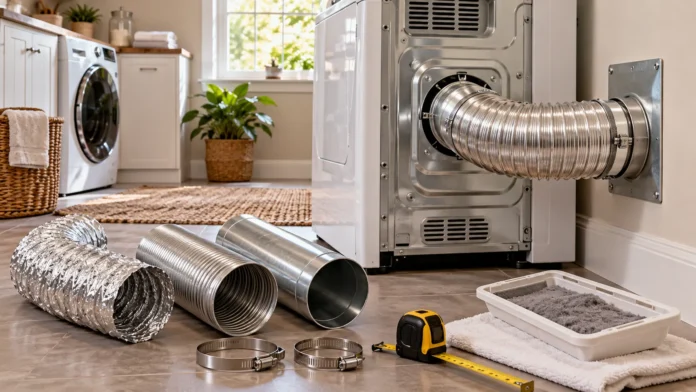
A dryer vent hose plays an important role in keeping your clothes dryer working efficiently and safely. It carries warm, moist air and lint particles from the appliance to an outdoor exhaust opening, helping prevent excess moisture and heat from accumulating inside your home. Choosing the right dryer vent hose can improve drying performance, reduce energy waste, and minimize potential fire hazards.
However, not all dryer vent hoses are designed for the same purpose. Different materials, sizes, and installation requirements can affect airflow, durability, and overall safety. Understanding the difference between rigid metal ducts, semi-rigid metal connections, and unsuitable flexible materials is essential for making an informed decision. This guide explains dryer vent hose types, standard measurements, installation considerations, maintenance requirements, and important safety practices.
What Is a Dryer Vent Hose and How Does It Work?
A dryer vent hose is the connecting duct that carries exhaust air from a clothes dryer toward the building’s outdoor vent system. During a drying cycle, the appliance removes moisture from clothing by circulating heated air through the drum. This air then moves through the lint filter and exhaust system before leaving the building.
The exhaust connection typically links the dryer outlet to a rigid metal duct installed through the wall, floor, or another approved route. As the dryer operates, the system must allow sufficient airflow to remove moisture, heat, and remaining lint particles. Restrictions within the vent can interfere with this process and increase drying times.
Although people often refer to the entire exhaust system as a dryer vent hose, the flexible connector and permanent exhaust duct serve different purposes. The short connection behind the appliance is called a transition duct, while the main exhaust duct continues toward the outdoors. Understanding this distinction is important because the two sections have different material and installation requirements.
Different Types of Dryer Vent Hoses
Dryer vent connections are available in several materials, but not every type meets current safety requirements. Common options include rigid metal ducts, semi-rigid aluminum connectors, flexible foil products, and older plastic hoses. The material affects airflow resistance, lint accumulation, durability, and the ability to withstand temperatures generated during normal dryer operation.
Rigid metal ducts are generally preferred for permanent exhaust systems because their smooth interiors support better airflow and reduce places where lint can collect. Semi-rigid metal transition ducts are sometimes permitted between the appliance and permanent duct when properly listed and approved. These products serve different installation needs and should not automatically be considered interchangeable.
Flexible foil and plastic dryer vent hoses may still be found in older homes or sold for various ventilation purposes. However, plastic is unsuitable for conventional dryer exhaust systems, and ordinary foil-style connections may not meet applicable safety standards. Always check the appliance manufacturer’s instructions, the product’s safety listing, and local building requirements before choosing replacement materials.
Rigid Metal Dryer Vent Ducts and Their Benefits
Rigid metal ducts are considered a reliable choice for permanent clothes dryer exhaust installations. They are commonly made from galvanized steel or aluminum and have relatively smooth interior walls. This construction helps maintain airflow while reducing the ridges and depressions where lint can accumulate inside flexible materials.
Another benefit of rigid metal ductwork is its ability to maintain its shape when correctly supported and installed. Unlike lightweight flexible connections, rigid sections are less likely to become compressed behind walls or ceilings. Their solid construction also allows professionals to design more consistent exhaust routes with suitable fittings and connections.
Rigid ducts do require sufficient space and careful planning, especially when the dryer is positioned near a wall or inside a compact laundry room. Straight sections and properly selected elbows help maintain an efficient exhaust pathway. For concealed exhaust runs, smooth metal ductwork should meet the applicable construction standards and the dryer manufacturer’s specifications.
Semi-Rigid Aluminum Dryer Vent Hoses
Semi-rigid aluminum dryer vent hoses are often used as short transition connections between a dryer and the permanent exhaust duct. They are made from formed metal that provides some flexibility while maintaining more structure than lightweight foil products. This design can be useful when a completely straight connection is difficult to achieve.
A suitable semi-rigid connector can accommodate limited adjustments in dryer position and exhaust alignment. However, its ribbed interior can still collect lint, particularly when the hose is compressed or installed with unnecessary bends. Keeping the connection as short and straight as practical helps reduce restrictions and supports more efficient ventilation.
Not every semi-rigid hose is automatically approved for dryer installations, so product labeling matters. Where applicable codes require it, the transition duct should be listed to UL 2158A and installed as one accessible length. Homeowners should avoid using flexible transition materials inside concealed walls, ceilings, or floors.
Why Plastic and Flexible Foil Dryer Hoses Are Risky
Plastic dryer vent hoses were used in some older installations, but they are not suitable for conventional heated clothes dryer exhaust systems. Plastic materials may deteriorate under heat and can contribute to dangerous conditions during overheating. They also tend to have ribbed interiors that encourage lint accumulation and restrict airflow.
Lightweight flexible foil hoses present additional concerns because they can become crushed, torn, or compressed more easily than suitable metal ductwork. Their internal ridges may collect lint, especially where the hose sags or bends sharply. Ordinary foil products should not be treated as equivalent to properly listed metal transition ducts.
If an existing dryer has a plastic or unsuitable foil exhaust connection, a qualified installer can assess the safest replacement. The appropriate choice depends on appliance requirements and applicable building codes. Selecting approved metal components helps support better airflow and reduces avoidable risks associated with damaged or poorly installed venting materials.
What Is the Standard Dryer Vent Hose Size?
The standard exhaust duct diameter for many residential clothes dryers is four inches, or approximately 102 millimeters. This measurement commonly applies to both the dryer exhaust connection and the permanent ventilation duct. However, the correct dimensions should always be confirmed using the installation instructions for the specific dryer model.
Using an undersized vent can increase airflow resistance and interfere with normal dryer operation. An oversized or poorly adapted connection may also cause compatibility problems if the components do not fit securely. Matching the manufacturer’s specified diameter helps maintain the airflow characteristics intended for the appliance.
Length is equally important when choosing a dryer vent connection. Under commonly adopted U.S. model codes, a flexible transition duct must not exceed eight feet and must remain accessible, although local requirements may differ. The permanent exhaust duct follows separate length rules that depend on its bends, fittings, and manufacturer-approved design.
How Long Should a Dryer Vent Hose Be?
A dryer vent system should generally follow the shortest practical route to an approved outdoor termination. Longer ducts create greater resistance to airflow, particularly when the route includes multiple elbows or sharp turns. Excessive length can contribute to slower drying, lint accumulation, and unnecessary stress on the appliance.
Many U.S. residential code provisions specify a baseline maximum permanent exhaust duct length of 35 feet, with reductions for certain bends. For example, typical allowances may subtract five feet for a standard 90-degree elbow. Manufacturer-approved engineered systems and local code provisions can establish different requirements, so the baseline should not be applied universally.
The flexible transition connector behind the dryer has its own limitations and is not intended to replace a permanent exhaust duct. Extra hose length should not be left coiled or compressed behind the machine. A professional can assess the overall route when the laundry room is far from an exterior wall or contains complicated duct connections.
How to Choose the Right Dryer Vent Hose
Choosing the right dryer vent hose begins with reviewing the appliance manufacturer’s installation requirements. These instructions identify compatible duct dimensions, acceptable materials, and important ventilation limitations. Homeowners should also determine whether they need a short transition connector or repairs to the permanent exhaust duct system.
Material quality and safety labeling deserve more attention than appearance or low purchase prices. A suitable product should maintain its shape, resist damage, and allow secure connections with approved fittings. If selecting a flexible metal transition duct, confirm that it carries the required listing and meets the rules applicable to your location.
The available space behind the dryer also influences the best connection arrangement. Compact laundry areas may benefit from a professionally selected low-profile connector or a suitable recessed dryer vent box. However, space-saving products must still maintain adequate airflow and comply with the manufacturer’s clearance and installation requirements.
Dryer Vent Hose Installation and Safety Considerations
Proper dryer vent installation is essential because an incorrectly connected exhaust system can restrict airflow and create safety concerns. The duct should lead outdoors through an approved termination rather than releasing hot, moist air into enclosed building spaces. Exhausting a conventional dryer into an attic, crawl space, or wall cavity can contribute to moisture damage and other hazards.
Duct connections should be secured using appropriate fittings and joining methods permitted by the manufacturer and local codes. Screws extending into the airflow path can catch lint, so protruding fasteners should be avoided. The installation must also preserve the function of the exterior backdraft damper and any necessary drainage features.
Gas dryers require particular attention because improper exhaust arrangements can allow combustion byproducts, including carbon monoxide, to enter occupied spaces. Any suspected exhaust problem should be addressed promptly by a qualified appliance or ventilation professional. Regardless of dryer type, the system should remain accessible for maintenance and should never interfere with normal appliance operation.
Common Dryer Vent Problems and Warning Signs
Longer-than-normal drying times are one of the most common warning signs of restricted dryer ventilation. Clothes that remain damp after an ordinary cycle may indicate poor airflow, an overloaded drum, or another appliance problem. If the issue continues despite normal loading and a clean lint filter, the exhaust system may need professional inspection.
Excessive heat around the dryer, unusual burning odors, or visible lint buildup near the connection can indicate a more serious problem. Stop using the appliance if you notice signs of overheating or a burning smell. A qualified professional should inspect the equipment before it is operated again.
A damaged, disconnected, or crushed vent hose can also affect drying performance and release unwanted moisture into the laundry area. Visible tears, loose joints, or repeated condensation deserve attention. Rather than continuing to operate a dryer with questionable ventilation, arrange an appropriate assessment to identify the problem and determine whether replacement components are required.
How to Maintain and Clean a Dryer Vent Hose
Regular dryer maintenance helps reduce lint accumulation and supports efficient airflow through the exhaust system. The lint filter should be cleaned after every drying cycle, following the appliance manufacturer’s instructions. Keeping the surrounding laundry area free from excessive lint and combustible clutter also contributes to safer operation.
The dryer exhaust duct and exterior vent should be inspected periodically for blockages, damage, and restricted airflow. Annual professional cleaning is a common recommendation, but homes with heavy dryer use, long duct runs, or recurring problems may need more frequent attention. Maintenance intervals should reflect the appliance manufacturer’s guidance and the condition of the ventilation system.
The exterior termination should remain free from leaves, lint, and other obstructions while allowing its backdraft damper to operate properly. Screens that trap lint should not be added to dryer exhaust outlets where prohibited by applicable requirements. When cleaning involves inaccessible ducts or moving heavy equipment, professional service is generally the safer approach.
Conclusion
A dryer vent hose is an essential part of a clothes dryer’s exhaust system, helping remove heat, moisture, and lint from the appliance. Understanding the differences between rigid metal ducts, semi-rigid transition connections, and unsuitable materials supports better purchasing decisions. Choosing compatible components can improve airflow and reduce avoidable safety risks.
The correct dryer vent hose size, length, and installation method depend on appliance specifications and applicable building requirements. Smooth metal exhaust ducts and appropriately listed transition connectors are generally preferred for conventional dryer installations. Avoiding crushed hoses, excessive bends, and poorly secured connections helps the ventilation system function as intended.
Regular lint filter cleaning, periodic duct inspections, and timely maintenance are important for keeping the system in good condition. Signs of overheating, restricted airflow, or damaged connections should never be ignored. With suitable materials, professional installation when needed, and consistent maintenance, homeowners can support safer and more efficient clothes dryer operation.
FAQs
What type of dryer vent hose is best?
Rigid metal ductwork is generally best for permanent dryer exhaust systems because its smooth interior supports airflow. For short connections behind a dryer, an appropriately listed semi-rigid metal transition duct may be suitable.
What is the standard size of a dryer vent hose?
Most conventional residential clothes dryers use a four-inch exhaust duct, approximately 102 millimeters in diameter. Always confirm the required size using the dryer manufacturer’s installation instructions before purchasing replacement components.
Can I use a flexible dryer vent hose?
An approved flexible metal transition duct may be used between the dryer and permanent exhaust duct where permitted. It must meet applicable listing, length, accessibility, and manufacturer requirements.
How often should a dryer vent hose be cleaned?
Clean the dryer’s lint filter after every load and inspect the exhaust system regularly. Professional duct cleaning is commonly recommended annually, although maintenance needs vary with usage, duct length, and lint buildup.
Can a clogged dryer vent hose cause a fire?
Yes, restricted airflow and accumulated lint can contribute to dryer overheating and increase fire risks. Stop using the dryer if overheating or burning odors occur, and arrange professional inspection before operating it again.