

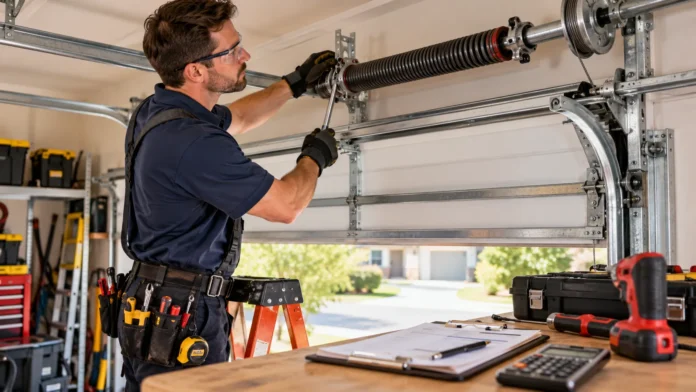
Garage door spring replacement is an important home maintenance task that affects the safety, performance, and reliability of your garage door. Springs help counterbalance the heavy weight of the door, allowing it to open and close smoothly. When these components wear out or break, the entire garage door system can become difficult to operate and potentially dangerous.
Understanding garage door spring replacement costs can help homeowners prepare for repairs and avoid unexpected expenses. Prices vary depending on the spring type, garage door size, labor charges, and additional components that may require attention. Recognizing the warning signs of failing springs can also help homeowners arrange professional service before mechanical problems become more serious.
This guide explains the average cost of replacing garage door springs, the differences between torsion and extension springs, and the main factors affecting repair expenses. It also covers safety precautions, expected spring lifespan, and the benefits of professional installation. With this information, homeowners can make informed decisions about maintaining a safe and dependable garage door.
What Is Garage Door Spring Replacement?
Garage door spring replacement involves removing worn, damaged, or broken counterbalance springs and installing suitable replacement components. These springs support much of the garage door’s weight, reducing the effort needed to raise and lower it. When a spring fails, the door may become unusually heavy, move unevenly, or stop operating altogether.
Most residential garage doors use torsion springs or extension springs, depending on their original design and hardware configuration. Although these systems operate differently, both store substantial mechanical energy during normal use. Replacing them requires specialized knowledge because the springs must be correctly matched to the door’s weight and mechanical requirements.
Professional garage door spring replacement typically includes evaluating the existing system, identifying compatible parts, and checking related components for damage. A qualified technician also verifies that the completed installation operates safely. Homeowners should avoid attempting this work themselves because improperly handled springs and associated hardware can cause serious injuries.
How Much Does Garage Door Spring Replacement Cost?
Garage door spring replacement in the United States commonly costs approximately $150 to $350 for a standard residential repair. However, the final price can vary depending on the type and number of springs, local labor rates, and the condition of surrounding hardware. More complicated installations or repairs involving additional components may cost considerably more.
Torsion spring replacement often falls within a range of approximately $150 to $350, while extension spring replacement may cost around $120 to $200. These are general estimates rather than guaranteed prices, and actual quotes can differ by location and service provider. Larger garage doors or specialized spring systems may require more expensive components.
Labor charges, emergency service fees, and additional repairs can increase the overall replacement expense. Homeowners should ask whether a quoted price includes parts, installation, inspections, taxes, and warranty coverage. Comparing written estimates from qualified technicians can help identify reasonable costs without sacrificing installation quality or safety.
Torsion Spring Replacement Cost
Torsion springs are commonly installed above the garage door opening and use rotational force to help counterbalance the door. These systems are frequently found in modern residential garages because they can support controlled movement when properly installed. Their replacement cost depends on spring specifications, door weight, and the complexity of the existing hardware.
In many residential situations, torsion spring replacement costs approximately $150 to $350, including typical installation expenses. Larger insulated doors or systems requiring multiple springs may increase the final price. Replacement costs may also rise when technicians discover damaged cables, worn bearings, or other components that require attention.
Torsion springs should always be replaced by trained professionals because they contain substantial stored mechanical energy. Incorrect handling can cause serious injuries or damage to surrounding equipment. A qualified installer can determine the appropriate replacement components and evaluate whether additional repairs are necessary for reliable door operation.
Extension Spring Replacement Cost
Extension springs are commonly positioned alongside the horizontal tracks of certain residential garage doors. These springs stretch and contract as the door moves, helping offset its weight during normal operation. They are often found in older garage door configurations, although their suitability depends on the specific design of the door.
Extension spring replacement generally costs approximately $120 to $200 for a typical residential repair. However, prices may increase when the system requires additional hardware, specialized parts, or repairs to related components. The number of springs and the technician’s labor charges also influence the total amount homeowners may pay.
Extension spring systems require appropriate containment safety cables to help reduce hazards if a spring breaks. Missing or damaged safety components should be assessed by a qualified technician. Because extension springs can release significant stored energy, homeowners should never attempt to remove, adjust, or replace them without professional training.
Factors That Affect Garage Door Spring Replacement Costs
Several factors influence the total cost of garage door spring replacement, including spring type, size, material quality, and expected operating lifespan. Garage doors with heavier construction may require higher-capacity springs that cost more than standard components. The number of springs used in the system also affects material and installation expenses.
Labor rates vary depending on geographical location, local demand, and the experience of the service provider. Homeowners in areas with higher living costs may receive more expensive estimates than those in smaller communities. Emergency appointments, difficult access, and repairs outside standard business hours can also increase service charges.
Additional mechanical problems may contribute to the final repair bill. Damaged cables, worn rollers, misaligned tracks, or defective mounting hardware sometimes require attention alongside the spring replacement. A detailed professional inspection helps identify these issues and allows homeowners to understand the complete scope of the recommended work.
Signs Your Garage Door Springs Need Replacement
One of the most noticeable warning signs of failing garage door springs is difficulty opening or closing the door. The door may feel unusually heavy, stop partway through movement, or operate unevenly. These problems can indicate a damaged counterbalance system, although other mechanical failures may produce similar symptoms.
A sudden loud noise from the garage can sometimes indicate that a spring has broken. Homeowners may also notice a visible gap in a torsion spring, displaced components, or unusual changes in the garage door’s position. Such signs deserve immediate attention because continued operation can create additional safety risks.
Other warning signs include excessive vibration, unusual grinding sounds, and an electric opener that struggles to move the door. These symptoms do not automatically confirm spring failure, but they indicate that professional inspection may be necessary. Avoid operating a garage door that appears unstable or has visible spring damage.
Why Garage Door Spring Replacement Is Dangerous
Garage door springs are dangerous to handle because they store substantial mechanical energy while helping support a heavy door. Even when the garage door is stationary, the spring assembly may remain under significant tension. Incorrect handling of springs, cables, or mounting components can result in sudden movement and serious injuries.
A damaged spring can also affect the stability of the entire garage door. When the counterbalance system fails, the door may become difficult to control or move unexpectedly. Attempting to force the door open, manually lift it, or disconnect operating components can create additional hazards for people nearby.
Professional technicians receive training to evaluate these systems and use appropriate equipment during repairs. Homeowners should never attempt spring tension adjustments, component removal, or replacement as ordinary DIY maintenance. If a spring appears broken, the safest response is to stop using the door and arrange qualified professional assistance.
Should You Replace Both Garage Door Springs?
Some residential garage doors use two springs that work together to counterbalance the door’s weight. When one spring fails, the remaining spring may have experienced a similar number of operating cycles. For this reason, technicians sometimes recommend replacing both components during the same service appointment.
Replacing matched springs together may help maintain consistent performance and reduce the possibility of another service interruption shortly afterward. It can also reduce repeated labor expenses compared with arranging separate visits. However, the correct decision depends on the spring configuration, age, condition, and specifications of the garage door system.
Homeowners should discuss the technician’s recommendation before approving additional work. A professional should explain whether replacing both springs is necessary or advisable for the particular installation. Clear communication about component condition, replacement costs, and expected performance can help homeowners make an informed decision.
How Long Do Garage Door Springs Last?
Garage door spring lifespan is commonly measured in operating cycles rather than years alone. One cycle generally represents a complete opening and closing movement. Many standard residential springs are rated for approximately 10,000 cycles, although higher-cycle products and other spring specifications are also available.
The actual lifespan depends on how frequently the garage door operates and the conditions surrounding the installation. A household that opens and closes its garage door several times daily may experience spring wear sooner than one with occasional use. Environmental exposure, corrosion, and mechanical imbalance can also affect performance.
Spring ratings provide general expectations but cannot predict the exact date of failure. Some springs may last longer than expected, while others can develop problems earlier because of unusual operating conditions. Regular professional inspections and prompt attention to warning signs can help homeowners manage maintenance and replacement needs.
Professional Garage Door Spring Replacement vs. DIY
Garage door spring replacement is not an appropriate DIY project because the components involve high mechanical tension and heavy moving equipment. Ordinary home repair experience does not provide the specialized training needed to manage these risks. Even a seemingly minor mistake can lead to dangerous movement or damage to the garage door system.
Professional technicians can assess spring compatibility, evaluate the surrounding hardware, and perform the replacement using established safety procedures. They can also identify underlying problems that may have contributed to the original failure. Proper replacement is important because unsuitable springs can affect door balance, opener performance, and long-term reliability.
Although professional service involves labor costs, it provides valuable protection against the risks of incorrect installation. Homeowners can still participate safely by comparing estimates, reviewing warranty details, and describing observed symptoms. Physical work involving spring tension, cable assemblies, and related hardware should remain the responsibility of qualified professionals.
How to Choose a Reliable Garage Door Spring Repair Service
Choosing a reliable repair company is essential for safe garage door spring replacement. Homeowners should look for experienced technicians who understand residential counterbalance systems and can explain their recommendations clearly. Appropriate business credentials, customer feedback, and transparent communication can help identify trustworthy service providers.
Requesting written estimates from different companies can make it easier to compare the proposed work. Each estimate should identify the replacement components, labor charges, additional services, and available warranties. Be cautious of unusually low quotes that do not clearly explain what is included or why particular repairs are recommended.
A reputable technician should also evaluate the condition of related garage door components rather than focusing exclusively on the broken spring. After the work is completed, the company should confirm that the system operates properly and explain relevant maintenance considerations. Clear documentation and dependable after-service support can provide additional confidence.
How to Reduce Future Garage Door Spring Repair Costs
Preventive maintenance can help reduce unexpected garage door repair expenses by identifying developing problems early. Regular professional inspections allow technicians to evaluate spring condition, cable wear, alignment, and other mechanical components. Addressing minor concerns before they become serious failures may reduce unnecessary damage to the garage door system.
Homeowners can also monitor garage door performance during normal use without touching dangerous components. Changes in movement, unusual sounds, visible deterioration, or repeated opener difficulties should be reported promptly. Keeping the surrounding garage area clear and following manufacturer maintenance recommendations can support safer everyday operation.
Choosing correctly specified replacement springs is another important long-term consideration. A qualified technician may explain whether a higher-cycle spring option is suitable for a heavily used garage door. Comparing expected service life, replacement costs, and warranty coverage can help homeowners evaluate overall value rather than focusing only on initial price.
Conclusion
Garage door spring replacement is an essential repair that helps maintain safe and dependable garage door operation. Costs commonly range from approximately $150 to $350 for many standard residential repairs, although spring type, labor rates, and additional mechanical problems can affect the final price. Understanding these factors helps homeowners prepare financially and compare professional service estimates.
Recognizing warning signs such as uneven movement, unusual noises, visible spring damage, and difficulty opening the door is equally important. Broken or deteriorating springs can create serious safety hazards because of the heavy door and stored mechanical energy involved. Professional inspection and replacement are the safest approaches when these problems occur.
Ultimately, homeowners should prioritize reliable workmanship, appropriate replacement components, and regular maintenance over short-term savings. Hiring qualified garage door technicians helps reduce the risks associated with high-tension spring systems. With timely repairs and informed maintenance decisions, a garage door can continue providing convenient, reliable service for years.
Frequently Asked Questions (FAQs)
How Much Does Garage Door Spring Replacement Cost?
Garage door spring replacement commonly costs between $150 and $350 for a standard residential repair in the United States. Actual prices depend on spring type, labor charges, location, and additional hardware requirements.
Is It Safe to Replace Garage Door Springs Yourself?
No. Garage door springs store significant mechanical energy and can cause serious injuries if handled incorrectly. Spring replacement and tension adjustments should always be performed by trained professionals.
How Long Does a Garage Door Spring Usually Last?
Many residential garage door springs are rated for approximately 10,000 operating cycles. Their actual lifespan depends on usage frequency, environmental conditions, spring quality, and the overall condition of the garage door system.
Should Both Garage Door Springs Be Replaced Together?
Replacing both springs may be recommended when they have similar wear and operating histories. However, the appropriate decision depends on the system’s design and should be determined through professional inspection.
What Happens When a Garage Door Spring Breaks?
A broken spring can leave the garage door improperly balanced, making it difficult or dangerous to operate. Stop using the door, avoid manual lifting, and contact a qualified garage door repair technician.