

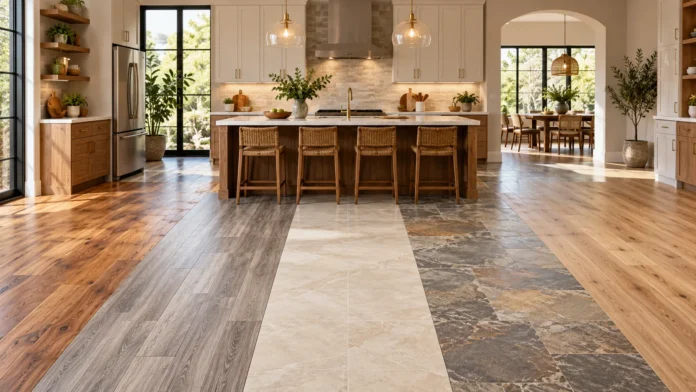
Choosing the right kitchen flooring is one of the most important decisions when renovating or designing a home. Kitchen floors experience frequent foot traffic, accidental spills, dropped utensils, and regular cleaning. The best flooring options for kitchens combine durability, water resistance, comfort, and attractive designs that complement the overall interior.
There are several kitchen flooring materials available, including ceramic tile, porcelain tile, luxury vinyl, hardwood, laminate, and natural stone. Each material offers different advantages and disadvantages depending on household needs and budget. Some flooring types provide excellent moisture resistance, while others offer warmth, natural beauty, or easier installation.
Understanding the pros and cons of kitchen flooring helps homeowners avoid expensive mistakes and choose materials that perform well over time. Factors such as maintenance, installation costs, durability, and cleaning requirements should influence the decision. This guide explores popular kitchen flooring options and explains which materials may work best for different homes.
Why Choosing the Right Kitchen Flooring Matters
Kitchen flooring plays an important role in everyday comfort, safety, and functionality. Unlike some other rooms, kitchens regularly experience water splashes, food spills, and movement around appliances. A suitable floor should withstand these conditions while remaining practical to clean and maintain.
The flooring material also influences the appearance of the entire kitchen. Different colors, textures, and finishes can create modern, traditional, or rustic designs. Choosing flooring that complements cabinets, countertops, and walls helps create a more coordinated interior.
Durability and long-term maintenance are equally important considerations. Some flooring materials have higher installation costs but may last longer with proper care. Others provide affordable initial options while requiring additional maintenance or earlier replacement.
Ceramic Tile Flooring: An Affordable and Durable Choice
Ceramic tile is one of the most common kitchen flooring materials because of its versatility and wide range of designs. It is manufactured from clay and other materials that are shaped and fired at high temperatures. Properly installed ceramic flooring provides a durable surface suitable for many residential kitchens.
One major advantage of ceramic tile is its resistance to everyday spills and surface wear. Glazed ceramic tiles are generally easy to clean and available in numerous colors and patterns. They can also create attractive kitchen designs without requiring premium natural materials.
However, ceramic tile has some disadvantages that homeowners should consider. Hard surfaces may feel uncomfortable during extended standing, and dropped objects can break easily. Grout lines also require maintenance, while individual tiles may crack if the subfloor or installation is unsuitable.
Porcelain Tile Flooring: Strong and Water-Resistant
Porcelain tile is a dense ceramic material commonly used in kitchens, bathrooms, and other moisture-prone areas. It is manufactured to meet specific standards for low water absorption. This makes porcelain particularly attractive for homeowners who prioritize durability and moisture resistance.
Porcelain flooring offers excellent resistance to everyday surface wear when the correct product is selected. Many designs imitate natural stone, concrete, or wood, allowing homeowners to achieve different appearances. Its relatively low maintenance requirements also make it suitable for busy households.
The main disadvantages involve installation complexity, hardness, and potential cost. Porcelain can be difficult to cut and may require specialized installation tools. Like other tile flooring, it can feel cold underfoot and requires a properly prepared subfloor to reduce cracking.
Luxury Vinyl Plank Flooring: Comfort and Practicality
Luxury vinyl plank flooring, commonly called LVP, is a popular option for homeowners seeking the appearance of wood with easier maintenance. It consists of manufactured layers designed to provide decorative appeal and surface protection. Many products are specifically marketed for kitchens and other frequently used areas.
One important benefit of luxury vinyl plank flooring is its comfortable feel compared with ceramic or porcelain tile. Many products also resist surface water effectively and are relatively easy to clean. Wood-look finishes allow homeowners to create a warm kitchen appearance without installing natural hardwood.
However, vinyl flooring varies significantly in quality, construction, and durability. Some products can become scratched or damaged by heavy furniture and excessive heat. Water-resistant planks do not automatically protect the subfloor from leaks that reach beneath the flooring.
Luxury Vinyl Tile Flooring: A Versatile Kitchen Option
Luxury vinyl tile, often abbreviated as LVT, is designed to resemble materials such as stone, ceramic, or concrete. It offers homeowners another practical alternative to traditional hard flooring. Its manufactured construction allows a wide range of colors, surface textures, and decorative patterns.
LVT is generally easier on the feet than hard ceramic or stone flooring. Many products are suitable for everyday kitchen spills when installed correctly. Some collections also provide relatively straightforward maintenance, making them appealing to homeowners who prefer uncomplicated cleaning routines.
Its limitations depend on product quality and installation requirements. Heavy appliances, sharp objects, or unsuitable cleaning products may damage certain finishes. Homeowners should also understand that vinyl flooring cannot be refinished in the same way as natural hardwood.
Hardwood Flooring: Natural Beauty and Timeless Appeal
Hardwood flooring is valued for its natural appearance, warmth, and ability to complement various kitchen designs. Common wood species include oak, maple, and hickory. Its distinctive grain patterns can create a welcoming atmosphere in traditional and contemporary homes.
One advantage of solid hardwood flooring is that many products can be refinished when they become worn. Proper maintenance may allow high-quality hardwood floors to remain useful for many years. The material also creates visual continuity when installed across connecting living and dining areas.
However, hardwood is sensitive to excessive moisture and changes in humidity. Spills should be cleaned promptly, and persistent leaks can cause swelling or distortion. Kitchens with frequent water exposure may require more maintenance than homeowners expect.
Engineered Hardwood Flooring: A Stable Wood Alternative
Engineered hardwood flooring combines a real wood surface with a layered structural core. This construction is designed to provide greater dimensional stability than some solid wood flooring under changing environmental conditions. It can offer a natural wood appearance in kitchens where appropriate installation requirements are met.
Many engineered hardwood products resemble traditional hardwood because their visible surface is genuine wood. Different finishes and plank sizes provide flexibility for kitchen designs. Some products may also be compatible with particular subfloor systems or approved installation methods.
Despite these benefits, engineered hardwood is not waterproof. Prolonged moisture exposure can damage the wood surface or underlying layers. Refinishing possibilities also depend on the thickness of the top wood layer, so homeowners should review product specifications carefully.
Laminate Flooring: Affordable Wood-Look Designs
Laminate flooring is a manufactured material that uses a decorative surface layer to imitate wood, stone, or other finishes. It has become popular among homeowners seeking attractive flooring at relatively accessible prices. Modern laminate products offer a wide range of patterns and surface textures.
One advantage of laminate is its resistance to certain types of everyday surface wear. Many products use protective coatings that help reduce visible scratches. Click-lock installation systems may also simplify installation when the subfloor meets the manufacturer’s requirements.
Traditional laminate flooring can be vulnerable to moisture-related swelling, particularly around joints and exposed edges. Some newer products offer improved water resistance, but their limitations differ. Homeowners should distinguish between water-resistant and waterproof marketing claims before selecting laminate for a kitchen.
Natural Stone Flooring: Elegant and Long-Lasting
Natural stone flooring offers distinctive colors, textures, and patterns that cannot be reproduced exactly across individual tiles. Popular kitchen materials include slate, granite, limestone, and travertine. These surfaces can create an elegant appearance in both traditional and contemporary interiors.
Certain stone materials are highly durable when correctly selected and installed. Their natural variations provide decorative character, while suitable finishes can complement different kitchen styles. Stone flooring may also contribute to a consistent design when used in connecting interior spaces.
However, natural stone often requires more specialized maintenance than porcelain or vinyl. Some varieties are porous and may need sealing to reduce staining. Installation costs, material weight, and slip resistance should also be evaluated before choosing stone flooring.
Marble Flooring: Luxury With Extra Maintenance
Marble flooring is known for its distinctive veining, elegant appearance, and association with luxury interiors. It is a natural stone available in numerous colors and patterns. Marble can create a sophisticated kitchen design, particularly when coordinated with cabinets and countertops.
The primary advantage of marble is its unique visual character. Its polished or honed finishes offer different decorative effects, while natural color variation adds interest. Many homeowners appreciate its ability to create a refined appearance in carefully designed kitchens.
Marble also has important disadvantages because it is sensitive to acidic substances and surface scratching. Common kitchen spills may cause etching or staining, depending on the finish and maintenance. Homeowners should be prepared for regular care and understand that sealing does not prevent every type of damage.
Cork Flooring: Comfortable and Naturally Resilient
Cork flooring is produced using material harvested from the bark of cork oak trees. It has a distinctive appearance and naturally resilient structure. This makes it appealing to homeowners who want a softer-feeling kitchen floor compared with traditional tile.
One benefit of cork is its comfortable surface, which may feel less rigid during everyday kitchen activities. It also provides some thermal and acoustic insulation. Available finishes and colors allow cork flooring to complement different interior design styles.
However, cork can be vulnerable to moisture, dents, and surface wear when not adequately protected. Heavy furniture may leave impressions, and prolonged water exposure can cause damage. Homeowners should select products specifically approved for kitchen use and follow maintenance recommendations.
Bamboo Flooring: A Distinctive Natural-Look Option
Bamboo flooring is manufactured from processed bamboo material and is often chosen for its distinctive grain and appearance. Although bamboo is botanically a grass, flooring products are engineered into rigid planks. Their performance depends heavily on construction methods and manufacturing quality.
Some bamboo flooring products offer good resistance to everyday wear and are available in attractive contemporary finishes. Strand-woven bamboo can be particularly dense, although hardness does not guarantee resistance to every type of damage. Its appearance suits modern and minimalist kitchen designs.
Moisture remains an important concern because bamboo flooring is not automatically waterproof. Poor-quality products may experience dimensional changes, surface damage, or installation problems. Buyers should review product testing, emissions certifications, and manufacturer recommendations before choosing bamboo for a kitchen.
Concrete Flooring: Modern and Industrial Style
Concrete flooring is a popular design option in contemporary kitchens, especially those featuring industrial or minimalist interiors. Existing concrete slabs may sometimes be finished and used as the visible floor. Decorative techniques can produce different colors, textures, and surface appearances.
One advantage of concrete is its solid structure and potential longevity when correctly prepared and maintained. Suitable surface treatments can improve appearance and resistance to everyday staining. Its continuous visual style may also complement open-plan kitchen and living areas.
However, concrete is extremely hard and may feel uncomfortable during prolonged standing. Cracking, moisture movement, and surface staining are possible depending on the substrate and finish. Professional assessment is useful before converting an existing slab into a finished kitchen floor.
Sheet Vinyl Flooring: Budget-Friendly Moisture Protection
Sheet vinyl is a flexible flooring material supplied in large rolls rather than individual planks or tiles. It is often used in kitchens because it can provide a continuous surface with relatively few seams. Different printed patterns allow it to imitate wood, tile, and other materials.
A major advantage is its relatively accessible price and straightforward cleaning requirements. Properly installed sheet vinyl can resist everyday spills and provide a comfortable surface underfoot. Its limited number of seams may also reduce some opportunities for water to penetrate between flooring sections.
The disadvantages include possible tears, indentation, and damage from sharp objects. Repairs may be more noticeable than those involving individually replaceable planks. Installation quality and subfloor preparation strongly influence the appearance and durability of the finished surface.
Best Kitchen Flooring for Water Resistance
Water resistance is one of the most important considerations when selecting kitchen flooring. Spills around sinks, dishwashers, and refrigerators can occur unexpectedly. Materials that tolerate surface moisture help reduce the likelihood of visible damage during normal household use.
Porcelain tile and properly selected vinyl flooring are common choices for moisture-prone kitchens. Glazed ceramic tiles can also perform well when installed appropriately. However, grout joints, edges, and connections with surrounding surfaces still require attention.
No flooring system should be treated as protection against serious plumbing leaks. Water can sometimes reach the subfloor through damaged seams or building components. Prompt leak repairs and appropriate waterproofing details remain important regardless of the selected flooring material.
Best Flooring for High-Traffic Kitchens
Busy kitchens require flooring that can withstand repeated movement, dropped objects, and frequent cleaning. Households with children, pets, or regular visitors may place additional demands on floor surfaces. Choosing durable materials can help reduce premature wear.
Porcelain tile is frequently selected for high-traffic areas because of its hardness and suitable wear characteristics. Quality luxury vinyl and certain laminate products may also perform well. Product specifications are important because durability can vary within the same flooring category.
Comfort should be considered alongside surface strength. Very hard floors can feel tiring during extended standing, while softer materials may be more vulnerable to dents. The best choice balances durability, maintenance, and the way the kitchen is used.
Best Kitchen Flooring for Homes With Pets
Pets can influence flooring decisions because claws, water bowls, and occasional accidents create additional maintenance challenges. Smooth surfaces that are easy to clean may be useful in households with animals. Slip resistance is also important for comfortable pet movement.
Porcelain tile and suitable luxury vinyl products are common options for pet-friendly kitchens. Some textured finishes provide better traction than highly polished surfaces. However, individual products vary in scratch resistance and cleaning requirements.
Homeowners should avoid assuming that a material marketed as pet-friendly is completely resistant to damage. Heavy activity and standing moisture can affect many flooring types. Regular cleaning and suitable surface protection help maintain appearance over time.
How Much Does Kitchen Flooring Cost?
Kitchen flooring costs vary considerably depending on material selection, product quality, installation method, and local labor rates. Sheet vinyl and some laminate products often have lower initial material costs. Natural stone and premium hardwood may involve greater expenses.
Installation can represent a substantial portion of the total project cost. Subfloor repairs, removal of existing flooring, and necessary moisture control may increase the budget. Complex room layouts can also affect labor requirements and material waste.
Homeowners should compare total installed costs rather than evaluating material prices alone. Long-term maintenance and expected replacement needs also influence overall value. Obtaining detailed estimates helps prevent unexpected expenses and supports more informed decisions.
How to Choose the Best Kitchen Flooring Material
Choosing kitchen flooring begins with identifying household priorities. Some homeowners focus on water resistance and easy cleaning, while others prefer comfort or natural appearance. Understanding how the kitchen is used helps narrow the available options.
Existing subfloor conditions and installation requirements also influence material suitability. Heavy tile and stone may require structural evaluation, while resilient flooring often needs a smooth, properly prepared surface. Manufacturer guidance should be reviewed before purchasing materials.
A practical decision balances appearance, durability, comfort, maintenance, and available budget. Examining samples under actual kitchen lighting can help homeowners compare finishes and textures. The best kitchen floor is one that performs reliably while complementing the surrounding design.
Conclusion
The best flooring options for kitchens include porcelain tile, ceramic tile, luxury vinyl, hardwood, laminate, and several specialized materials. Each offers advantages and disadvantages involving water resistance, durability, comfort, and appearance. Understanding these differences helps homeowners choose flooring suited to their needs.
Porcelain tile is attractive for moisture resistance and durability, while luxury vinyl offers a softer feel and flexible design options. Hardwood provides natural character but requires careful moisture management. Materials such as cork, stone, and bamboo may suit particular preferences when their limitations are understood.
A successful kitchen flooring project depends on selecting suitable materials and ensuring proper installation. Subfloor condition, maintenance requirements, and long-term costs deserve careful consideration. Comparing these factors allows homeowners to create an attractive, functional kitchen floor that supports everyday living.
Frequently Asked Questions (FAQs)
What Is the Best Flooring for a Kitchen?
Porcelain tile and quality luxury vinyl are popular kitchen flooring choices because of their durability and moisture resistance. The best option depends on comfort preferences, budget, maintenance, and installation requirements.
Is Vinyl or Tile Better for Kitchen Floors?
Vinyl generally feels softer and may be easier to install, while porcelain tile offers excellent durability and water resistance. Both have advantages depending on household needs and product quality.
What Is the Most Affordable Kitchen Flooring?
Sheet vinyl, some laminate products, and selected ceramic tiles can provide affordable options. Total costs depend on installation, subfloor preparation, material quality, and local labor prices.
Is Hardwood Flooring Suitable for Kitchens?
Hardwood can be used in kitchens when moisture is carefully managed. However, spills and plumbing leaks can damage wood, making maintenance and prompt cleanup particularly important.
Which Kitchen Flooring Is Easiest to Maintain?
Porcelain tile and many luxury vinyl products are relatively easy to clean. Maintenance still depends on surface finish, installation quality, and manufacturer recommendations.