

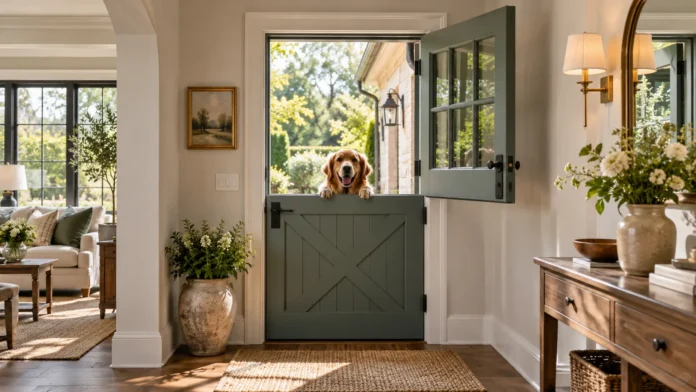
An interior Dutch door is a charming and practical addition that can transform the appearance and functionality of a home. Unlike traditional doors, Dutch doors are divided horizontally into two independent sections, allowing the upper half to open while the lower half remains closed. This distinctive design offers flexibility, visual interest, and convenient ways to connect different rooms.
Choosing the right interior Dutch door involves considering your home’s architectural style, available space, privacy requirements, and everyday needs. From classic farmhouse designs to contemporary glass-panel options, Dutch doors are available in several attractive styles. Their versatility makes them suitable for kitchens, home offices, nurseries, laundry rooms, and other interior spaces.
Whether you are remodeling your home or searching for a creative alternative to ordinary interior doors, understanding the available options can help you make a confident decision. This guide explores the best interior Dutch door styles, materials, practical benefits, installation considerations, and helpful tips for selecting a design that complements your home.
What Is an Interior Dutch Door?
An interior Dutch door is a door divided horizontally into two separate sections that can operate independently. The upper portion can remain open while the lower portion stays closed, creating a partial barrier between rooms. Most designs also include hardware that allows both sections to connect and function like a conventional full-height door.
Dutch doors have historical roots in European residential architecture and became popular in traditional farmhouse-style homes. Their practical design allowed homeowners to control access while encouraging airflow and communication. Today, interior Dutch doors are used for similar purposes while also serving as distinctive architectural features in modern homes.
These doors can be made from solid wood, engineered wood, or other suitable interior door materials. Some designs feature glass panels, decorative molding, or contemporary flat surfaces. The best choice depends on the intended location, desired appearance, hardware requirements, and how frequently the door will be used.
1. Classic Wooden Dutch Door – A Timeless Interior Choice
A classic wooden Dutch door is an excellent option for homeowners who appreciate traditional craftsmanship and natural materials. These doors typically feature solid or engineered wood construction with simple panel details. Their familiar appearance works beautifully in country homes, traditional interiors, and spaces that emphasize warmth and character.
Wooden Dutch doors can be painted or stained to complement existing flooring, cabinets, and furniture. Popular finishes include natural oak tones, warm walnut stains, and classic painted white. Decorative paneling can add visual interest without making the door appear overly elaborate or distracting from the surrounding interior design.
The main advantage of a wooden Dutch door is its versatility. It can work in kitchens, hallways, laundry rooms, and other everyday spaces. However, wood requires appropriate finishing and maintenance, particularly in areas where humidity changes could affect the door’s shape or smooth operation.
2. Modern Dutch Door – Clean Lines and Contemporary Style
Modern interior Dutch doors focus on simplicity, clean lines, and understated architectural details. These designs often feature flat panels, minimal decorative molding, and sleek hardware. Their streamlined appearance makes them suitable for contemporary homes where homeowners prefer functional features without elaborate traditional decoration.
Popular modern finishes include matte white, charcoal grey, black, and muted neutral tones. A flat-panel Dutch door can blend naturally with minimalist furniture and simple wall treatments. Choosing matching hardware and consistent door trim helps maintain a cohesive appearance throughout the room.
Modern Dutch doors are particularly appealing for home offices, creative workspaces, and contemporary kitchens. Their divided construction provides useful flexibility while maintaining a visually organized design. Homeowners should choose hardware that operates smoothly and supports both door sections securely during everyday use.
3. Farmhouse Dutch Door – Rustic Charm for Cozy Interiors
Farmhouse Dutch doors are among the most recognizable styles because they combine practical design with traditional country-inspired details. They often feature raised panels, decorative crossbars, or painted wooden surfaces. Their inviting appearance makes them popular in kitchens, mudrooms, and homes decorated with rustic furniture and natural materials.
White and cream are common farmhouse Dutch door colours, although sage green, muted blue, and natural wood finishes also work beautifully. Black metal hinges and classic handles can enhance the traditional appearance. Decorative trim and simple panel designs help create a charming focal point without overwhelming the room.
Farmhouse Dutch doors work especially well when paired with wooden flooring, woven accessories, and warm neutral walls. They can create a welcoming transition between adjoining spaces while maintaining a distinctive country-house atmosphere. Selecting durable materials and appropriate finishes helps ensure that the door remains both attractive and practical.
4. Glass Panel Dutch Door – Bring More Light Between Rooms
A glass panel interior Dutch door combines the flexibility of a split door with the visual openness of glass. The upper section typically includes one or more glass panels, allowing light to pass between adjoining rooms. This design is particularly attractive in spaces where maintaining brightness is an important consideration.
Clear glass creates a more open connection between rooms, while frosted or textured glass provides additional visual privacy. Homeowners can choose from simple rectangular panes, divided-light patterns, or contemporary designs with larger glass sections. The appropriate style depends on the desired balance between openness and privacy.
Glass panel Dutch doors can be useful in home offices, kitchens, and interior hallways. However, the glass should meet applicable safety requirements for door installations, especially in areas where accidental impact is possible. Proper framing, suitable glazing, and reliable hardware are important for long-term performance.
5. Half-Glass Dutch Door – A Balanced and Practical Design
A half-glass Dutch door typically combines a glazed upper section with a solid lower portion. This design allows light and visibility while maintaining a physical barrier near the floor. It provides a useful middle ground between a completely solid door and a largely glazed interior design.
The lower section can feature traditional wood panels or a contemporary smooth surface. Clear, frosted, or decorative glass can be selected for the upper half according to the room’s purpose. Matching the door frame and surrounding trim helps create a coordinated architectural appearance.
Half-glass Dutch doors are especially attractive for home offices, craft rooms, and kitchens. They allow people to see into adjoining spaces even when both door sections are closed. Homeowners should consider privacy requirements carefully because clear glass does not provide the same visual separation as a solid door.
6. White Interior Dutch Door – Bright and Versatile
A white interior Dutch door is a popular choice for homeowners seeking a clean and timeless appearance. White works with numerous decorating styles, including farmhouse, coastal, Scandinavian, and traditional interiors. Its light finish can help maintain a bright atmosphere and complement a variety of wall colours.
White Dutch doors can feature raised panels, recessed panels, or smooth contemporary surfaces. Decorative hardware in black, brushed nickel, or warm metallic finishes can provide attractive contrast. The choice of hardware allows homeowners to adjust the door’s appearance without changing its overall design.
This option is particularly useful when existing interior doors and trim are already painted white. Matching finishes can help the new door feel integrated rather than visually disconnected. Choosing durable, washable paint is helpful in frequently used spaces where fingerprints and everyday marks may appear.
7. Black Interior Dutch Door – A Bold Design Statement
A black interior Dutch door creates a striking architectural feature that adds contrast and definition to a room. Its dark finish works particularly well with light walls, natural wooden flooring, and contemporary furnishings. Homeowners who appreciate modern or industrial-inspired interiors may find this style especially appealing.
Matte black is a common choice because it provides a sophisticated appearance without excessive shine. Raised-panel designs can create a traditional look, while smooth surfaces emphasize contemporary simplicity. Hardware in matching black or contrasting brass finishes can further influence the overall visual effect.
Black Dutch doors are particularly effective when used as accent features in kitchens, home offices, or hallways. However, dark finishes may reveal dust, scratches, or fingerprints under certain lighting conditions. A durable painted finish and straightforward cleaning routine help maintain the door’s attractive appearance.
8. Dutch Door With Shelf – A Functional Interior Feature
An interior Dutch door with a shelf includes a small horizontal surface along the top of its lower section. This feature can provide a convenient resting area for lightweight items when the upper portion is open. It also adds a traditional architectural detail that complements farmhouse and country-inspired interiors.
Shelf dimensions and construction vary according to the door’s design. Some shelves are integrated into the lower panel, while others are installed as decorative additions. The shelf should be securely attached and positioned so it does not interfere with normal door operation or nearby furniture.
This design can be useful between kitchens and adjoining rooms where occasional communication or passing lightweight objects is convenient. However, the shelf should not be treated as a heavy-duty countertop. Proper installation and reasonable loading help maintain safe operation and prevent damage to the door or hardware.
9. Dutch Door for Home Office – Privacy and Communication
A Dutch door can be a practical addition to a home office because it offers flexible separation from surrounding living spaces. Keeping the lower half closed while opening the upper portion allows visual communication without leaving the entire doorway open. This arrangement may be useful in busy households.
A solid Dutch door can offer greater visual privacy when fully closed, while a glass-panel design allows additional light into the workspace. Homeowners should consider sound requirements because a Dutch door may not provide the same acoustic separation as a well-sealed conventional door. The central joint can also allow additional sound transmission.
Choosing a home office Dutch door involves balancing convenience, privacy, and interior style. Neutral painted finishes often complement professional workspaces, while natural wood adds warmth. Smooth latching mechanisms and suitable handles make it easier to operate the door comfortably during everyday activities.
10. Dutch Door for Kitchen – Convenient and Attractive
Kitchens are popular locations for interior Dutch doors because the design can create separation without completely disconnecting adjoining areas. A Dutch door between a kitchen and hallway may provide convenient communication while maintaining a partial barrier. Its distinctive appearance can also complement traditional or contemporary kitchen cabinetry.
Painted wood and moisture-resistant engineered materials are common considerations for kitchen installations. White, sage green, and natural wood finishes can coordinate beautifully with cabinets, countertops, and flooring. Choosing suitable hardware helps ensure that the door operates reliably in a frequently used household space.
Homeowners should also evaluate ventilation, traffic flow, and accessibility before installing a kitchen Dutch door. A divided door may not be suitable where people frequently carry large items through the doorway. Careful positioning and appropriate clearances help ensure that the door improves convenience rather than interfering with everyday kitchen activities.
11. Dutch Door for Nursery – Flexible Room Separation
An interior Dutch door is sometimes considered for a nursery because it can provide partial room separation while allowing visibility and communication. The split design offers an alternative to leaving a conventional door fully open. However, child safety should be the most important consideration when evaluating this installation.
Dutch doors contain additional joints, hinges, and moving edges that can create finger-pinching hazards. Children may also attempt to climb a closed lower section, so the door should never be treated as a substitute for an approved safety gate or appropriate supervision. Hardware and installation should meet relevant safety requirements.
Parents considering this design should consult a qualified installer about suitable latches, finger protection, and safe operation. A well-designed door may complement nursery decor, but appearance should not override safety. Choosing a layout that supports visibility and everyday convenience without creating unnecessary hazards is essential.
12. Custom Interior Dutch Door – A Personalized Design
Custom interior Dutch doors are suitable for homeowners who want a design tailored to specific dimensions, materials, or architectural preferences. Unlike standard models, custom doors can accommodate unusual openings and distinctive decorative requirements. This flexibility makes them appealing for older homes or renovation projects involving nonstandard door frames.
Customization options may include solid wood species, decorative panels, glass inserts, paint colours, and hardware finishes. Homeowners can also discuss the placement of the horizontal division to suit the intended design. However, the split must accommodate proper hardware, structural stability, and safe operation.
A custom Dutch door typically requires greater planning and may cost more than a standard manufactured option. Working with an experienced carpenter or door specialist can help ensure accurate measurements and suitable construction. The result can be a distinctive interior feature designed around the specific character of the home.
Benefits of Installing an Interior Dutch Door
One major benefit of an interior Dutch door is the flexibility it offers between adjoining rooms. The upper and lower sections can be positioned differently depending on the situation. This allows homeowners to create a partial barrier while maintaining visual connections and encouraging some airflow through the opening.
Dutch doors also introduce architectural character that conventional doors may not provide. Traditional paneling, attractive hardware, and carefully selected finishes can turn a practical doorway into a decorative feature. Their distinctive appearance makes them especially suitable for homeowners who enjoy personalized interior design.
Another advantage is their versatility across different household spaces. Kitchens, home offices, laundry areas, and other suitable rooms may benefit from flexible access. However, Dutch doors are not ideal for every location, particularly where strong sound isolation, complete privacy, or specialized safety requirements are priorities.
Interior Dutch Door Materials: Which One Should You Choose?
Material selection influences the appearance, durability, maintenance requirements, and cost of an interior Dutch door. Solid wood is popular because of its natural grain patterns and traditional character. It can be stained or painted, although changes in humidity may cause some movement in certain wooden components.
Engineered wood products can provide a more consistent surface and may be suitable for painted interior doors. However, construction quality and moisture resistance vary considerably between products. Homeowners should examine the door’s core materials, edge construction, and finishing requirements before selecting a particular option.
Glass is another important consideration for designs that include transparent or decorative panels. Safety glazing may be required depending on applicable building regulations. Selecting compatible materials and suitable hardware helps ensure that both sections operate smoothly and maintain an attractive appearance over time.
Interior Dutch Door Cost and Budget Considerations
The cost of an interior Dutch door depends on its material, dimensions, design complexity, and installation requirements. Standard manufactured options may be more affordable than custom solid-wood models. Decorative glass panels, specialty hardware, and unusual measurements can increase the overall project expense.
As a broad planning estimate, some basic interior Dutch doors may cost several hundred dollars, while customized designs can exceed $1,000 before installation. Actual prices vary by market and manufacturer. Professional fitting, frame modifications, finishing, and hardware can add significantly to the final cost.
Homeowners should compare the complete project cost rather than focusing only on the door’s purchase price. A lower-priced door may require additional modifications that reduce the initial savings. Obtaining detailed estimates from qualified suppliers and installers helps establish a realistic renovation budget.
How to Choose the Right Size for an Interior Dutch Door
Accurate measurements are essential for selecting a Dutch door that fits properly and operates smoothly. Homeowners should measure the existing door slab, opening, frame, and available clearance. Standard interior door dimensions vary according to regional building practices, making it important to confirm actual measurements rather than relying on assumptions.
The position of the horizontal division is another important consideration. A lower section that is too tall may interfere with comfortable communication, while an unsuitable split may complicate hardware placement. The best configuration depends on the door’s purpose, structural design, and safety requirements.
Older homes may contain door openings that are not perfectly square or level. In these situations, professional measurement can prevent installation difficulties. A qualified installer can also determine whether the existing frame is suitable for supporting the additional hardware associated with a Dutch door.
Interior Dutch Door Installation: What You Should Know
Installing an interior Dutch door involves more than fitting a conventional door into an opening. Both sections require appropriate hinge support, accurate alignment, and compatible latching hardware. The installer must also ensure that the upper and lower portions can operate independently without rubbing or creating excessive gaps.
Some existing door frames can be adapted, while others require reinforcement or replacement. Installation complexity depends on the door’s weight, construction, and condition of the surrounding frame. Additional attention may be necessary for the central connection mechanism and the points where the two sections meet.
Professional installation is often worth considering, particularly for heavy wooden doors, custom designs, or unusual openings. Improper fitting can lead to alignment problems, difficult operation, and premature hardware wear. Following manufacturer instructions and applicable building requirements helps create a more reliable finished installation.
Best Hardware and Finishes for Interior Dutch Doors
Hardware plays an important role in the performance and appearance of an interior Dutch door. Each section needs suitable hinges, while a connecting bolt or latch allows both halves to operate together. Door handles and additional latching mechanisms should be positioned for convenient and safe use.
Popular hardware finishes include matte black, brushed nickel, polished chrome, and antique brass. Traditional farmhouse doors often feature darker metal details, while contemporary designs may use understated matching hardware. Choosing compatible finishes can help coordinate the Dutch door with nearby cabinets, lighting fixtures, and existing interior doors.
Quality hardware should be selected according to the door’s weight and construction. A door with heavy glass panels or solid wood sections may require stronger hinges than a lightweight alternative. Proper alignment and periodic maintenance help keep the connecting mechanisms operating smoothly over time.
Common Mistakes to Avoid When Buying an Interior Dutch Door
One common mistake is purchasing a Dutch door without accurately measuring the opening and checking the existing frame. Even small measurement differences can cause alignment problems. Homeowners should confirm dimensions, hinge placement, and required clearances before ordering a manufactured or custom door.
Another mistake is choosing a design based only on appearance without considering everyday functionality. Glass panels may reduce privacy, while heavy wooden construction may require additional support. The door’s split height, latch position, and operating direction should match the room’s intended use.
Homeowners should also avoid overlooking safety and maintenance requirements. Finger-pinching points, inappropriate hardware, and poorly secured components can create unnecessary risks. Selecting reliable construction and professional installation when needed helps ensure that the finished door remains attractive, practical, and comfortable to use.
Conclusion
An interior Dutch door is a distinctive architectural feature that combines traditional charm with practical flexibility. From classic wooden designs and farmhouse styles to modern glass-panel options, homeowners can choose from several attractive configurations. The divided construction allows different ways of connecting adjoining rooms while adding visual interest to the interior.
Choosing the right Dutch door requires careful consideration of materials, dimensions, hardware, privacy, and everyday functionality. A design that works beautifully in a kitchen may not be equally suitable for a bedroom or nursery. Accurate measurements, appropriate safety features, and reliable installation are essential for achieving a successful result.
Whether you prefer a bright white farmhouse door, a sophisticated black design, or a custom wooden model, the right interior Dutch door can complement your home’s character. Thoughtful planning helps balance appearance, convenience, and durability. With suitable materials and proper installation, this unique door style can become a lasting and attractive addition to your living space.
Frequently Asked Questions (FAQs)
1. What is an interior Dutch door?
An interior Dutch door is a horizontally divided door with upper and lower sections that can open independently. A connecting latch typically allows both sections to operate together like a conventional door.
2. Where can you install an interior Dutch door?
Interior Dutch doors can be installed in kitchens, home offices, laundry rooms, and suitable hallways. Nursery installations require particular attention to child safety, secure hardware, and potential finger-pinching hazards.
3. Are interior Dutch doors expensive?
Prices vary according to size, material, design, and installation requirements. Basic manufactured options may cost several hundred dollars, while custom wooden or glass-panel designs can exceed $1,000 before installation.
4. Can you turn a regular interior door into a Dutch door?
Some conventional doors can be converted into Dutch doors when their construction is suitable. However, the process requires structural assessment, additional hardware, accurate alignment, and appropriate safety precautions.
5. Are Dutch doors practical for modern homes?
Yes, Dutch doors can provide flexible room separation, visual connection, and distinctive architectural style. Their practicality depends on the room’s purpose, privacy needs, available clearance, and quality of installation.