

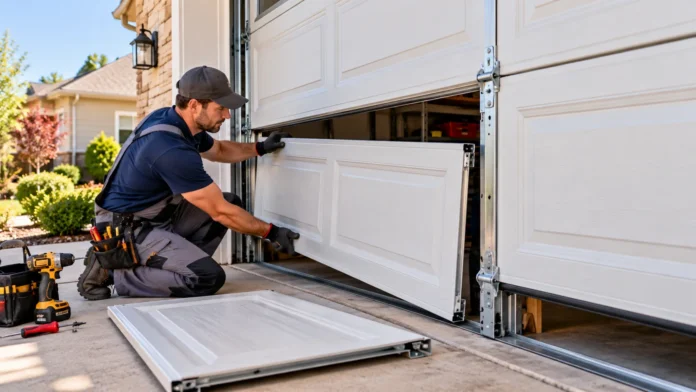
Garage door panel replacement is a practical solution for homeowners dealing with damaged, dented, cracked, or deteriorating garage door sections. Instead of replacing the entire garage door, you may be able to replace only the affected panel. This approach can restore the door’s appearance and functionality while avoiding the higher expense of a complete replacement.
The cost of replacing a garage door panel depends on several factors, including the door material, panel size, design, and professional installation requirements. In the United States, many standard panel replacements cost between $350 and $900, including labor. However, specialty materials, discontinued designs, and additional repairs can increase the total cost.
Understanding your garage door panel replacement options can help you make an informed decision. Some panels can be repaired, while others require replacement because of structural damage or compatibility concerns. This guide explains typical replacement costs, available materials, signs of damage, and important considerations when hiring a professional garage door technician.
What Is Garage Door Panel Replacement?
Garage door panel replacement involves removing a damaged section of a compatible sectional garage door and installing a matching replacement. Most residential sectional doors contain several horizontal sections connected by hinges. When one section becomes damaged, a professional may be able to replace it without removing the entire door assembly.
Garage door panels contribute to both the appearance and structural integrity of the door. They must work correctly with the hinges, tracks, rollers, and counterbalance system. A replacement panel should therefore match the manufacturer’s specifications rather than simply having similar dimensions or exterior styling.
Not every garage door supports individual panel replacement. Some older designs use a single large section, while others have discontinued components that are difficult to obtain. A qualified garage door professional can identify the door model, inspect its condition, and determine whether replacing one section is a practical option.
How Much Does Garage Door Panel Replacement Cost in 2026?
Garage door panel replacement typically costs between $350 and $900 per panel for many standard residential projects in the United States. The national average is approximately $550, although prices vary by location and door specifications. Premium materials and specialty designs can push costs considerably higher than the typical range.
The replacement panel itself may cost approximately $150 to $800, depending on its material, size, and design. Professional labor commonly adds another $200 to $500. Additional expenses may apply when the repair involves damaged hardware, unusual access requirements, or components that need replacement.
The following table provides general planning estimates for different replacement scenarios. These are approximate U.S. costs, not guaranteed quotations, and individual categories may overlap depending on the manufacturer and installation requirements.
| Replacement Type | Estimated Cost |
|---|---|
| Standard single-panel replacement | $350–$900 |
| Basic replacement panel, material only | $150–$800 |
| Professional installation labor | $200–$500 |
| Specialty glass panel replacement | $400–$1,000+ |
| Two standard panels | $700–$1,800 |
| Full garage door replacement | $700–$3,500+ |
Homeowners should obtain written estimates before approving the project. Actual costs depend on the number of panels, available replacement parts, and condition of the complete door system. Comparing the price of panel replacement with a new garage door helps determine which option offers better long-term value.
Garage Door Panel Replacement Cost by Material
Garage door panels are available in several materials, including steel, aluminum, wood, fiberglass, and composite products. Each material has different characteristics related to weight, durability, maintenance, and appearance. These differences influence both the replacement price and the suitability of available replacement parts.
Steel panels are common in residential garage doors because they provide strength and a wide selection of finishes. Aluminum is lightweight and resistant to rust, while wood creates a traditional appearance but may require additional maintenance. Fiberglass and composite products offer other design options depending on the manufacturer.
The most important consideration is compatibility with the existing garage door. Replacing a steel panel with an unrelated aluminum or wooden product is generally inappropriate, even when the dimensions appear similar. Panel weight, construction, and hardware requirements must match the door system to maintain safe and reliable operation.
Steel Garage Door Panel Replacement
Steel garage door panels are widely used in residential properties because of their durability and availability. They can be manufactured with different surface textures, decorative patterns, and insulated designs. Steel panels are commonly found in traditional raised-panel garage doors as well as contemporary flush-panel styles.
One advantage of steel is the availability of numerous factory finishes and construction options. Depending on the manufacturer, replacement sections may be available in matching colors or surface patterns. However, older doors can present challenges when the original finish or panel profile is no longer produced.
Steel panels can develop dents, rust, or other damage over time. Small cosmetic dents may be repairable, but severe bending or corrosion can affect structural performance. A professional inspection helps determine whether repairing the existing section is sufficient or replacing the panel is necessary.
Aluminum Garage Door Panel Replacement
Aluminum garage door panels are valued for their relatively lightweight construction and resistance to rust. They are often used in contemporary garage door designs, including models featuring large glass sections. The material can provide a clean architectural appearance while reducing some maintenance concerns associated with corrosion.
However, aluminum panels may develop dents from impacts because the material is relatively lightweight. The extent of damage determines whether repair or replacement is appropriate. Modern aluminum garage doors may also use specialized frames or panel systems that require manufacturer-specific replacement components.
Replacement pricing depends on panel dimensions, construction, and design. Basic aluminum sections may be relatively affordable, while contemporary models featuring custom finishes or glazing can be considerably more expensive. Confirming the original manufacturer’s specifications is important before selecting any replacement product.
Wood Garage Door Panel Replacement
Wood garage doors offer a classic appearance that complements traditional, rustic, and upscale residential architecture. Common designs include raised panels, carriage-house styling, and custom decorative details. Replacing a wooden section may help preserve the appearance of the original door without requiring a complete redesign.
Wood panels can deteriorate because of prolonged moisture exposure, insects, or inadequate finishing. Warping, cracking, and decay may affect both appearance and structural performance. The extent of damage should be assessed carefully because some problems involve surrounding components rather than one isolated section.
Replacement wooden panels can be more difficult to match when the original door features custom dimensions or decorative profiles. Differences in grain and finish may also remain visible after installation. Professional evaluation helps determine whether repair, refinishing, or full replacement provides the most practical solution.
Insulated vs. Non-Insulated Garage Door Panels
Garage door insulation can influence indoor comfort, particularly when the garage is attached to the house or used as a workspace. Insulated doors commonly feature foam or other insulating materials between protective surfaces. Non-insulated panels generally have simpler construction and may cost less to replace.
Insulated panels can help reduce heat transfer through the garage door, although actual performance depends on the complete building and installation. They may also affect door weight and stiffness. Replacement sections must be compatible with the existing door’s construction and counterbalance specifications.
Homeowners should avoid mixing incompatible insulated and non-insulated sections simply to reduce costs. Differences in weight or design can affect how the door operates. When insulation performance is a major concern, comparing the cost of replacing individual panels with installing a complete insulated door may be worthwhile.
What Factors Affect Garage Door Panel Replacement Costs?
Several factors influence the total cost of replacing a garage door panel. Panel size, material, insulation, finish, and manufacturer availability are among the most important. Larger or specialized sections generally cost more than standard replacement panels because they require additional materials or specific manufacturing processes.
Labor costs also vary depending on the installation complexity and local market. A technician may need to inspect surrounding components, address existing damage, or verify proper system operation. Additional repairs involving rollers, hinges, tracks, or other hardware can increase the final expense.
Older garage doors may create further challenges because exact replacement panels are not always available. A discontinued model could require specialized sourcing or make individual replacement impractical. Obtaining a detailed professional estimate helps identify these costs before deciding whether to repair or replace the entire door.
Signs That Your Garage Door Panel Needs Replacement
Visible dents are among the most common reasons homeowners consider garage door panel replacement. Small surface dents may be cosmetic, while larger deformations can interfere with normal operation. Damage near hinges, panel joints, or supporting components deserves particular attention because it may affect the door’s structural performance.
Cracks, corrosion, and deteriorating wood are additional warning signs. Rust that spreads through a steel panel can weaken the material, while moisture damage may compromise wooden sections. Panels that visibly separate, buckle, or no longer align correctly with adjacent sections require professional inspection.
Changes in door movement can also indicate a problem. Uneven operation, unusual noises, or difficulty closing may involve the panels or other mechanical components. Avoid operating a visibly damaged door until a qualified technician has evaluated its condition, especially when structural damage is suspected.
Can You Replace Just One Garage Door Panel?
Yes, replacing one garage door panel is possible on many sectional garage doors. This is often practical when the damage is limited to one section and the remaining components are in good condition. A matching replacement panel can restore appearance and functionality without the expense of purchasing an entirely new door.
However, the replacement must be compatible with the original manufacturer’s model. Factors such as panel thickness, height, profile, construction, and attachment points influence suitability. A panel that looks similar may not necessarily work safely with the existing door assembly.
The age of the garage door is another important consideration. Manufacturers may discontinue older models or change designs over time, making exact matches unavailable. If a suitable panel cannot be sourced, repairing the existing section or replacing the complete door may be more practical.
Garage Door Panel Repair vs. Replacement
Garage door panel repair may be appropriate when damage is minor and does not affect structural integrity. Small dents, surface scratches, or limited finish deterioration can sometimes be addressed without replacing the entire section. Repairing an otherwise sound panel may reduce expenses and preserve the original appearance.
Replacement becomes more appropriate when panels are significantly bent, cracked, corroded, or structurally weakened. Extensive damage can interfere with the door’s ability to operate correctly. A professional should also examine nearby components because visible panel damage may be accompanied by hidden mechanical problems.
The best decision depends on repair cost, panel availability, and expected remaining service life. A relatively inexpensive cosmetic repair may be sensible for a newer door. However, replacing a damaged section may provide better value when repairs cannot restore reliable operation.
When Should You Replace the Entire Garage Door?
Replacing the entire garage door may be more economical when several panels are damaged. Multiple individual replacements can become expensive, especially when labor and additional hardware repairs are included. A new door may provide a more consistent appearance and eliminate compatibility concerns associated with older sections.
Full replacement may also make sense when the existing door has significant rust, structural deterioration, or repeated operating problems. Older doors can require frequent maintenance, particularly when several components are approaching the end of their useful lives. Comparing total repair expenses with the cost of a new system helps clarify the options.
Homeowners interested in improved insulation, updated styling, or modern safety features may also consider complete replacement. However, a new garage door is not always necessary for minor damage. A professional assessment can help determine whether the existing system remains suitable for continued use.
How Long Does Garage Door Panel Replacement Take?
Professional garage door panel replacement often takes several hours, depending on the door design and extent of damage. Some straightforward projects may be completed within a few hours. More complicated replacements involving unusual panels, additional repairs, or older systems can require longer service appointments.
The availability of compatible replacement parts can also affect the overall project schedule. Standard panels may be easier to source, while custom finishes or discontinued designs may involve additional ordering time. Homeowners should distinguish between the actual installation appointment and the time required to obtain the replacement materials.
A qualified technician should inspect the completed door and confirm that its components operate correctly. The service may include adjustments and safety checks appropriate to the particular system. The total project schedule should account for these important tasks rather than focusing only on the physical panel exchange.
Is DIY Garage Door Panel Replacement Safe?
Garage door panel replacement can be hazardous because overhead door systems contain heavy components and high-tension springs. These mechanisms are designed to counterbalance the weight of the door, and incorrect handling can cause serious injury. Even a single panel may affect the balance and structural behavior of the entire assembly.
Replacing a panel is not the same as completing an ordinary cosmetic home repair. The work may involve components connected to the door’s lifting and support system. Attempting to loosen or adjust these parts without specialized training is unsafe, even when the visible damage appears straightforward.
Professional installation is the safer choice for garage door panel replacement. Homeowners can document visible damage, identify the manufacturer, and request estimates without disturbing mechanical components. If the door is badly damaged or moving abnormally, avoid using it and arrange a qualified inspection.
How to Find Matching Garage Door Replacement Panels
Finding a matching replacement panel begins with identifying the original garage door manufacturer and model. Information may be available in the door’s documentation or on an accessible product label. The manufacturer’s records can help determine whether a compatible replacement section remains available.
Panel appearance alone is not enough to confirm compatibility. Surface patterns, colors, insulation, and dimensions may differ between product generations. A professional supplier or authorized technician can review model information and determine whether an appropriate replacement part can be obtained.
Older doors sometimes present color-matching challenges because existing panels have faded from sunlight and weather exposure. Even an original factory color may look slightly different when installed beside aged sections. Homeowners should discuss these possibilities before approving replacement to avoid unexpected differences in appearance.
How to Choose a Garage Door Replacement Contractor
Choosing a qualified garage door contractor is important for both safety and long-term reliability. Look for businesses with relevant experience, appropriate insurance, and licensing where required. A professional should be able to evaluate the damaged door and explain whether panel replacement is suitable.
Request a written estimate that identifies the replacement panel, labor expenses, and any additional repairs. The contractor should explain whether the replacement matches the original manufacturer and whether the work affects existing warranties. Comparing itemized estimates helps homeowners understand differences between service providers.
Customer feedback and warranty information can provide further insight into service quality. Ask whether the estimate includes removal of damaged materials and testing of the completed system. Clear communication helps reduce misunderstandings and supports a more reliable repair experience.
How to Save Money on Garage Door Panel Replacement
One practical way to manage garage door panel replacement costs is to compare several professional estimates. Different contractors may have access to different suppliers or charge different labor rates. An itemized quote makes it easier to identify the cost of the replacement section and any additional services.
Repairing minor cosmetic damage may provide savings when the panel remains structurally sound. However, the decision should be based on a professional assessment rather than price alone. Delaying necessary repairs to a damaged door can create additional problems and potentially increase future expenses.
Homeowners should also compare panel replacement with the cost of a complete new door. If several sections require replacement, the overall expense may approach the price of a new system. Evaluating long-term condition, compatibility, and maintenance needs helps identify the most economical option.
How to Maintain Garage Door Panels
Regular visual inspection can help homeowners identify panel deterioration before it becomes extensive. Look for peeling paint, corrosion, visible cracks, and moisture damage. Changes in the door’s appearance or movement should be assessed promptly, particularly when they involve joints or supporting components.
Cleaning exterior panels according to manufacturer recommendations can help preserve their finish. Mild cleaning products suitable for the material may remove ordinary dirt without damaging protective coatings. Wooden doors may require periodic refinishing, while metal panels benefit from attention to corrosion or surface damage.
Avoid attempting mechanical adjustments involving springs, cables, tracks, or other high-tension components. These tasks should be handled by trained professionals. Routine professional maintenance can help identify operating problems and support reliable garage door performance over time.
Conclusion
Garage door panel replacement can be a cost-effective solution when damage is limited to one or a few sections. Many standard replacements cost between $350 and $900 per panel in the United States, although specialty materials and additional repairs can increase expenses. The final price depends on panel specifications, labor, and the condition of the existing door.
Choosing between panel repair, individual replacement, and complete garage door replacement requires careful evaluation. Minor cosmetic damage may be repairable, while significant structural deterioration often requires more extensive work. Compatibility with the original door system is essential for maintaining proper operation and safety.
Before making a decision, arrange an inspection with a qualified garage door professional and compare detailed estimates. Consider both immediate costs and long-term reliability rather than selecting the least expensive option automatically. With suitable replacement parts and professional installation, a damaged garage door can regain its appearance and dependable functionality.
Frequently Asked Questions
1. How Much Does It Cost to Replace One Garage Door Panel?
Replacing one garage door panel typically costs between $350 and $900, including professional installation. Actual prices depend on the panel material, size, manufacturer, labor requirements, and any additional repairs.
2. Can You Replace Just the Damaged Panel on a Garage Door?
Yes, many sectional garage doors allow individual panel replacement. However, the replacement must be compatible with the original door, and older models may not have matching replacement sections available.
3. Is It Cheaper to Repair or Replace a Garage Door Panel?
Repairing minor cosmetic damage is often cheaper than replacing a panel. However, replacement may provide better value when the section has significant structural damage or extensive deterioration.
4. How Long Does It Take to Replace a Garage Door Panel?
A professional replacement commonly takes a few hours, although complex projects may require longer. Obtaining a matching panel can add time when components must be specially ordered.
5. Should I Replace One Garage Door Panel or the Entire Door?
Replacing one panel is often practical when damage is isolated and the remaining door is in good condition. Full replacement may be more economical when several panels are damaged or compatible parts are unavailable.