

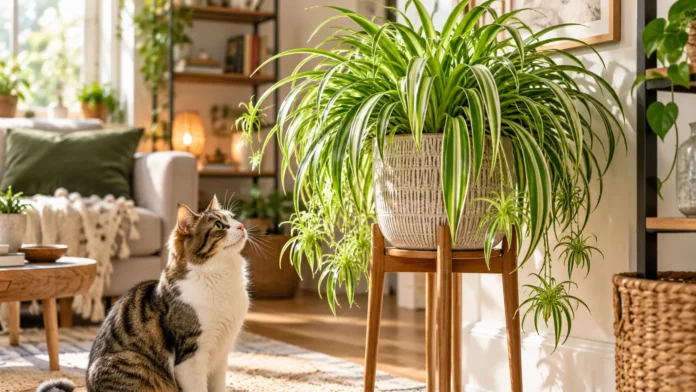
Is a Spider Plant Toxic to Cats?
Spider plants are generally considered non-toxic to cats, which makes them a popular choice for pet-friendly homes. Their long, arching leaves may look tempting to curious cats, but the plant is not usually associated with serious poisoning. This makes spider plants a much safer indoor greenery option than many common houseplants that can cause significant health problems when chewed.
Non-toxic does not mean that unlimited chewing is completely harmless. Cats that eat a noticeable amount of spider plant leaves may experience mild digestive irritation, including vomiting, loose stool, or temporary stomach discomfort. These reactions can happen simply because cats are not designed to digest large quantities of fibrous plant material, even when the plant itself is not poisonous.
If your cat regularly chews houseplants, keeping the spider plant slightly out of reach is still a sensible idea. Hanging baskets, tall shelves, and wall-mounted planters can protect the plant while maintaining an attractive indoor display. This approach allows you to enjoy a pet-friendly houseplant without encouraging repeated nibbling that could upset your cat’s stomach.
Why Cats Are Attracted to Spider Plants
Spider plants have long, narrow leaves that naturally move when air circulates through a room. This movement can make the foliage resemble a toy, especially to playful cats that enjoy chasing strings or grass-like objects. Hanging plantlets, sometimes called spiderettes, can be even more tempting because they dangle from long stems and move easily.
Some cats also enjoy chewing plants because the texture resembles grass. Indoor cats without access to safe cat grass may become particularly interested in soft houseplant leaves. While occasional nibbling may not cause serious harm with a spider plant, frequent chewing can damage the plant and potentially lead to mild digestive problems for the cat.
Behavior can also vary from one cat to another. One cat may completely ignore a spider plant, while another may immediately begin chewing or pulling at the leaves. Observing your pet’s behavior after introducing the plant helps you decide whether it can remain on a low surface or needs to be moved somewhere less accessible.
What Happens If a Cat Eats Spider Plant Leaves?
If a cat takes a few small bites from a spider plant, serious poisoning is generally not expected. Many cats may show no noticeable reaction at all after minor exposure. However, chewing larger amounts can irritate the digestive system because the leaves contain plant fibers that may be difficult for a cat’s stomach to process comfortably.
Possible signs after eating too much plant material can include mild vomiting, drooling, reduced appetite, or diarrhea. These symptoms are not necessarily caused by toxicity but can result from gastrointestinal irritation. Most mild cases may settle once the cat stops eating the plant, but continued symptoms deserve attention rather than being automatically dismissed.
If your cat develops repeated vomiting, unusual weakness, difficulty breathing, severe diarrhea, or other concerning symptoms, contact a veterinarian promptly. The cat may have eaten something else, swallowed a foreign object, or reacted more strongly than expected. Knowing which plants are accessible in your home can help your veterinarian evaluate the situation more effectively.
Keep Spider Plants Away From Constant Chewing
Even though spider plants are considered cat-friendly, protecting them from repeated chewing benefits both your pet and the plant. Cats can quickly tear the long leaves, leaving brown edges and damaged growth. Frequent plant eating may also become a habit, making your cat more likely to investigate other houseplants that may not be safe.
Hanging baskets are one of the easiest solutions because spider plants naturally look attractive when their leaves cascade downward. Place the basket where your cat cannot reach it from nearby furniture, shelves, or windowsills. Cats are skilled jumpers, so simply moving the plant a little higher may not be enough if there is an easy launching point nearby.
You can also provide safe alternatives such as cat grass in an accessible location. Giving your cat something appropriate to chew may reduce interest in decorative houseplants. Rotating toys, adding climbing spaces, and increasing interactive play can also help when plant chewing appears to be connected with boredom or a need for more environmental stimulation.
Give Spider Plants the Right Amount of Light
Spider plants grow best in bright, indirect light, although they are fairly adaptable compared with many houseplants. A location near a window with filtered sunlight usually encourages healthy leaves and strong growth. Too little light may slow growth and reduce variegation, while harsh direct sunlight can scorch the leaves and create dry brown patches.
East- or west-facing rooms can work well when the plant is positioned away from intense midday sun. If you have a very bright south-facing window, use a sheer curtain or place the plant several feet back. The goal is to provide plenty of brightness without allowing strong sunlight to heat and damage the foliage for hours.
Spider plants can survive in lower-light areas, but they may become thinner or less vigorous over time. If growth looks weak, move the plant closer to natural light gradually rather than making a sudden change. A balanced light level helps produce fuller leaves, stronger roots, and more of the attractive hanging plantlets that make spider plants so decorative.
Water Spider Plants Without Overdoing It
Spider plants prefer evenly moist soil but do not like sitting in water. Allow the top layer of potting mix to dry slightly before watering again. When you do water, soak the soil thoroughly until excess moisture drains from the bottom, then empty any water that collects in the saucer beneath the pot.
Overwatering can cause yellow leaves, weak roots, and eventually root rot. A pot that remains constantly wet is usually more dangerous than letting the soil become slightly dry between waterings. Seasonal changes also matter because plants generally use less water during cooler or darker months when growth naturally slows.
Leaf tips can sometimes turn brown even when watering seems correct. Dry indoor air, mineral buildup, inconsistent watering, or certain water conditions may contribute to this problem. Trimming brown tips for appearance is fine, but improving the underlying care routine usually gives better results than repeatedly cutting damaged leaf ends without addressing the cause.
Choose the Best Soil and Pot
A loose, well-draining potting mix works best for spider plants because it allows roots to receive both moisture and air. Standard indoor plant soil is usually suitable, especially when it drains freely. Avoid using heavy garden soil indoors because it may compact inside containers and keep roots wet for longer than the plant prefers.
The pot should have drainage holes so excess water can escape after watering. Decorative containers without drainage may look attractive, but they increase the chance of water collecting around the roots. One practical solution is to keep the spider plant in a draining nursery pot and place that inside a decorative outer container.
Spider plants often grow well when they are slightly root-bound, so frequent repotting is unnecessary. Move the plant into a slightly larger container when roots become extremely crowded or begin circling heavily around the pot. Choosing an oversized container can hold too much damp soil and make overwatering more likely.
Feed and Prune for Healthy Growth
Spider plants are not heavy feeders, so they do not need constant fertilizing. During active growth, a diluted balanced houseplant fertilizer used occasionally can support healthy leaves and new plantlets. Too much fertilizer may cause salt buildup in the soil, which can contribute to brown leaf tips and other signs of stress.
Pruning is simple because damaged or unattractive leaves can be removed near the base with clean scissors. Cut away yellow, broken, or badly browned foliage when necessary. Avoid removing large amounts of healthy growth at once, since the leaves are responsible for producing the energy the plant needs to maintain roots and new growth.
You can also trim long flower stalks or unwanted spiderettes if the plant becomes too large for its location. However, many people keep these hanging plantlets because they create the distinctive cascading look spider plants are famous for. Regular light grooming is usually enough to keep the plant neat without complicated pruning routines.
Propagate Spider Plants From Baby Plantlets
Spider plants are among the easiest houseplants to propagate because mature plants often produce small plantlets on long arching stems. These miniature plants already resemble the parent and may begin forming tiny roots while still attached. Propagation allows you to create new plants for different rooms or share them with friends.
One method is to cut a healthy plantlet from the parent and place its base in water until roots develop further. After the roots become established, move it into a small pot filled with well-draining soil. Another option is planting the baby directly into moist soil, especially when it already has visible root growth.
You can also place a small pot beside the parent plant and root the plantlet while it remains attached. Once the new plant has formed a strong root system, cut the connecting stem. This method reduces transplant stress and can be especially reliable for beginners who want a simple way to multiply healthy spider plants.
Style Spider Plants Beautifully in a Cat-Friendly Home
Spider plants look especially attractive in hanging planters because their long leaves naturally cascade over the sides. Hanging them near bright windows creates a lush appearance while also reducing easy access for cats. Choose secure hooks and sturdy planters so the display remains safe even if a curious pet attempts to reach it.
Tall plant stands can also work when they have stable bases and are positioned away from furniture. Pairing spider plants with decorative pots in neutral, textured, or natural finishes can complement modern, bohemian, Scandinavian, or traditional interiors. The green and white foliage provides visual interest without needing brightly colored flowers.
For a fuller indoor garden effect, group several pet-friendly plants at different heights. Keep larger plants on the floor and position spider plants higher so their leaves can trail downward. This layered arrangement creates depth and greenery while allowing you to design a stylish space that considers both plant care and pet behavior.
Use Spider Plants in Different Rooms
A spider plant can work beautifully in a living room, especially near a bright window or on a shelf where the foliage can hang freely. Its soft, arching shape adds movement to spaces filled with straight furniture lines. The plant also fits well beside bookshelves, side tables, and decorative wall arrangements when there is enough indirect light.
Bathrooms with good natural light can also be suitable because spider plants generally appreciate moderate humidity. A hanging plant near a bright bathroom window can create a fresh, relaxing atmosphere. Make sure the soil still drains properly, since higher humidity does not mean the roots should remain constantly wet.
Home offices and bedrooms are other good options when light conditions are appropriate. A small spider plant can soften a workspace, while a larger hanging specimen can add greenery above a reading corner. In homes with cats, consider how furniture placement might give pets access before deciding exactly where to display the plant.
Common Spider Plant Problems to Watch For
Brown leaf tips are one of the most common spider plant problems. They can appear because of inconsistent watering, mineral accumulation, dry air, or excessive fertilizer. The damaged section will not become green again, but adjusting care can prevent new leaves from developing the same problem over time.
Yellowing leaves may indicate too much water, poor drainage, or natural aging of older foliage. Check the soil before watering again and make sure excess moisture can leave the pot freely. If the roots smell unpleasant or look dark and soft, root problems may be developing and the plant may need fresh soil.
Spider plants can also occasionally attract common indoor pests such as spider mites, scale, or mealybugs. Inspect the undersides of leaves and areas around the base if the plant suddenly looks weak. Catching pests early makes them easier to manage and reduces the chance that they will spread to other houseplants.
Create a Safer Indoor Garden for Cats
A pet-friendly indoor garden should begin with checking every plant before bringing it into the home. Spider plants are generally considered safe, but many popular decorative species are not. Keeping a clear list of your indoor plants helps you identify potential risks quickly if your cat suddenly begins chewing leaves.
Placement is still important even with non-toxic plants because cats can knock over containers, dig in soil, or damage leaves. Heavy pots, stable stands, and secure hanging systems reduce accidents. Covering exposed soil with larger decorative stones may discourage digging, although the stones must be too large for a cat to swallow.
The safest approach combines plant selection with thoughtful home design. Give your cat appropriate climbing spaces, scratching posts, toys, and safe greenery such as cat grass. When pets have enough stimulation and acceptable things to investigate, they may be less likely to repeatedly target your decorative indoor plants.
Conclusion
Spider plants are generally considered non-toxic to cats, making them one of the more suitable houseplants for pet-friendly homes. However, eating large amounts of leaves can still cause mild digestive upset, so preventing frequent chewing remains a good idea. Hanging baskets and elevated displays can protect both your cat and the plant.
Good spider plant care is straightforward. Provide bright indirect light, well-draining soil, moderate watering, and occasional feeding during active growth. Light pruning and simple propagation can help you maintain a healthy plant while creating new spider plants for additional rooms or decorative arrangements.
With thoughtful placement, spider plants can become both practical and beautiful additions to a cat-friendly home. Their cascading leaves, easy care, and adaptable growth make them suitable for many interior styles. Combine safe plant choices with secure positioning and pet-friendly alternatives to create an indoor garden everyone can enjoy.
FAQs
Is a spider plant poisonous to cats?
Spider plants are generally considered non-toxic to cats. However, eating a significant amount of leaves may still cause mild vomiting, diarrhea, or stomach irritation because cats can have difficulty digesting plant material.
What should I do if my cat eats a spider plant?
If your cat takes a few bites and remains normal, serious poisoning is not generally expected. Contact a veterinarian if vomiting continues, severe symptoms develop, or you are uncertain what plant was eaten.
Why does my cat keep chewing my spider plant?
Cats may be attracted to the plant’s long, grass-like leaves and dangling plantlets. Offering cat grass, interactive toys, and more environmental stimulation may help reduce repeated chewing of decorative houseplants.
Where should I place a spider plant if I have cats?
A secure hanging basket or high shelf without nearby jumping points is often a good choice. Make sure the planter is stable and receives enough bright, indirect light for healthy growth.
Are spider plants easy to care for?
Yes. Spider plants are beginner-friendly and generally need bright indirect light, moderate watering, well-draining soil, and occasional feeding. They also produce baby plantlets that make propagation simple.